
Editor’s note: The following (lightly edited) feature article is the fifth installment of a new “How I Became Obsessed With Padel” series we’re rolling out from regular guest contributor, Scott Matulis, a former PR Director for the Worldwide Senior Tennis Tour who discovered padel in Vegas two years ago and can now hit balls off of the glass occasionally. He is the author of the LinkedIn and Substack serial novel The Applicant.
If you live in the burgeoning U.S. padel mecca of Salt Lake City but haven’t heard of the sport yet, Hollye Shepherd will likely be the one to introduce it to you.
After discovering the sport in Portugal four years ago and then becoming obsessed with it in Spain last year, she quickly recognized that its appeal went far beyond just playing. Since then she’s become a self-proclaimed padel promoter, telling me:
I saw the power of padel to bring people together, build community, and create connections beyond the court. Since falling in love with it, I find myself telling literally everyone about it… the AT&T salesman, our janitor, the guy installing our cabinetry, the glass cleaner, everyone.
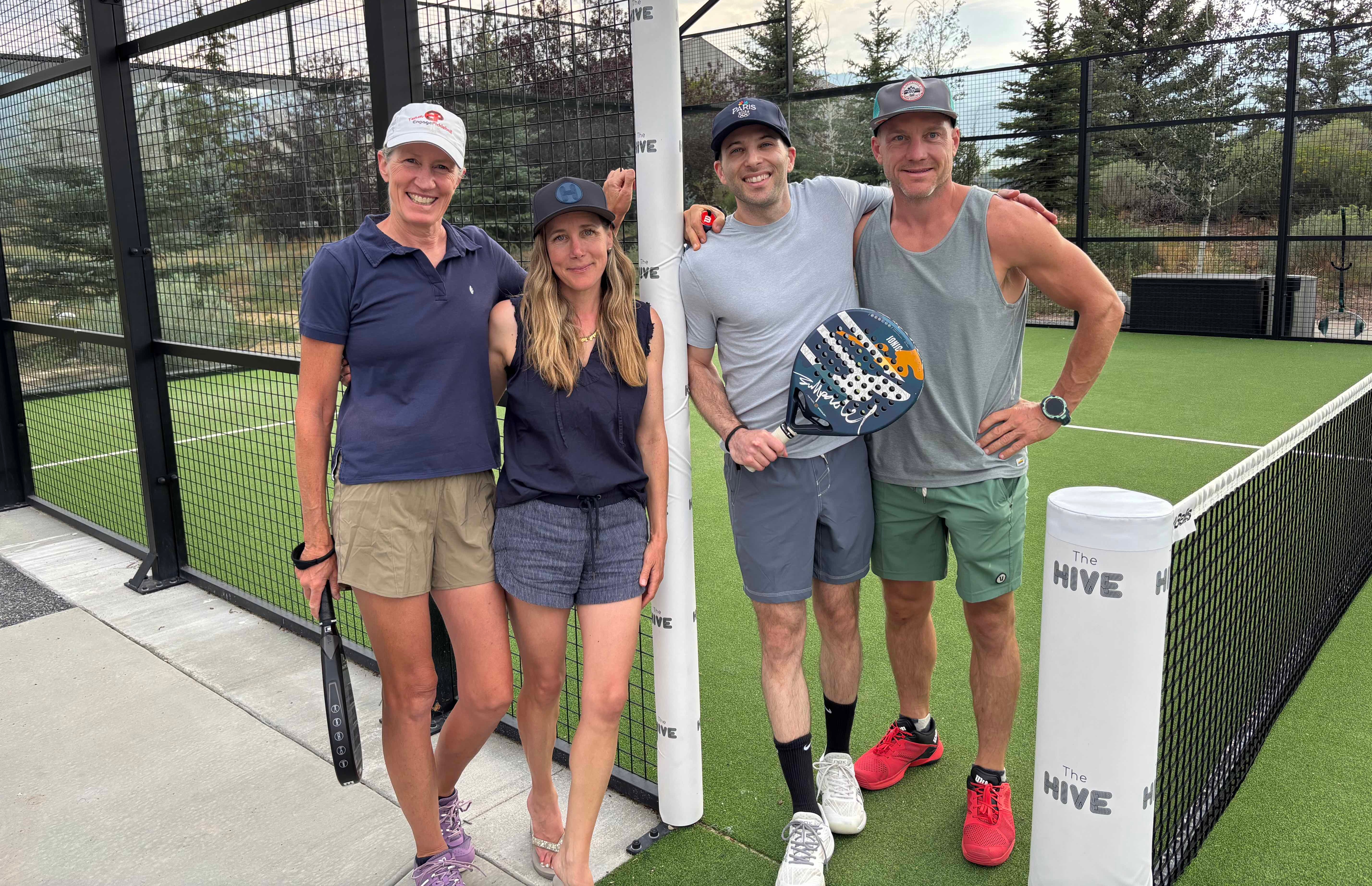
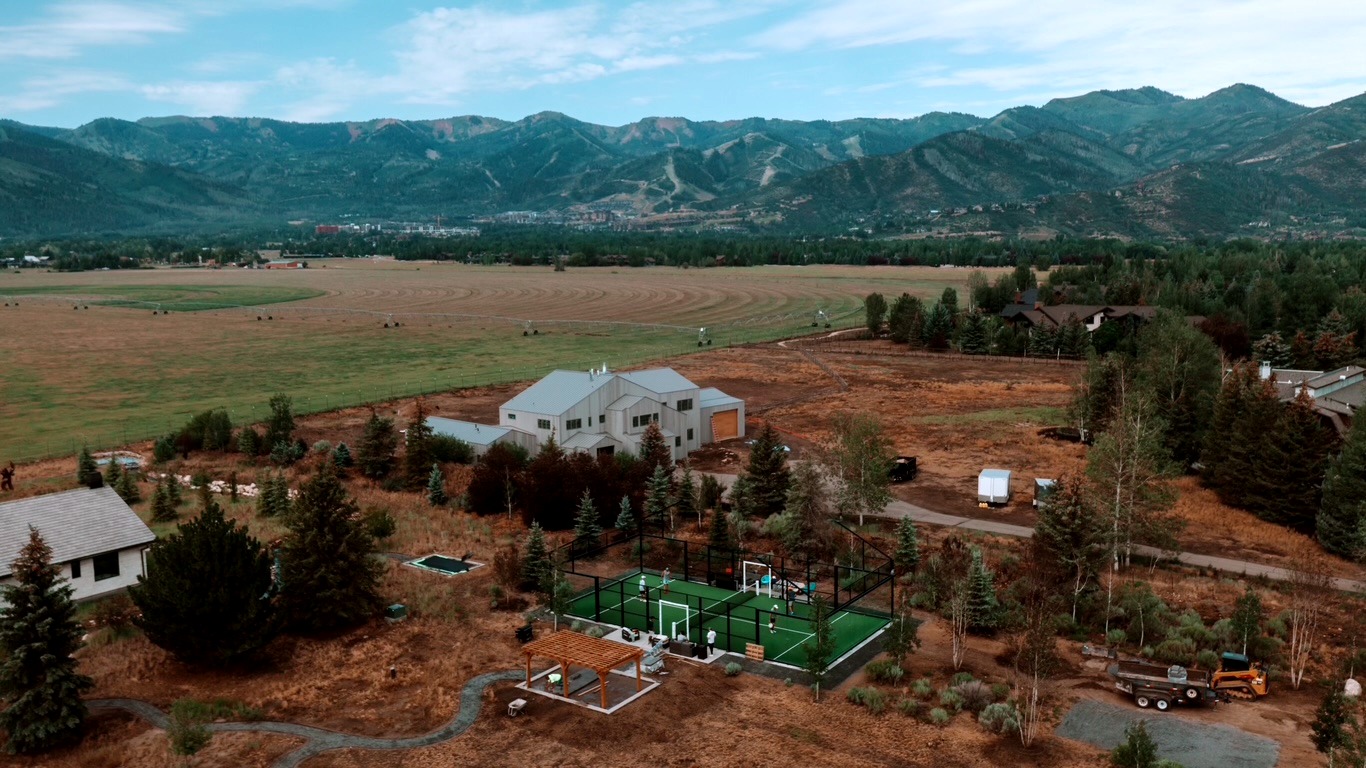
Hollye and her husband even built a court at their Park City, Utah home (pictured above and below) — and pretty soon so many players were coming out that she had to start using OpenCourt booking software to keep everything straight.
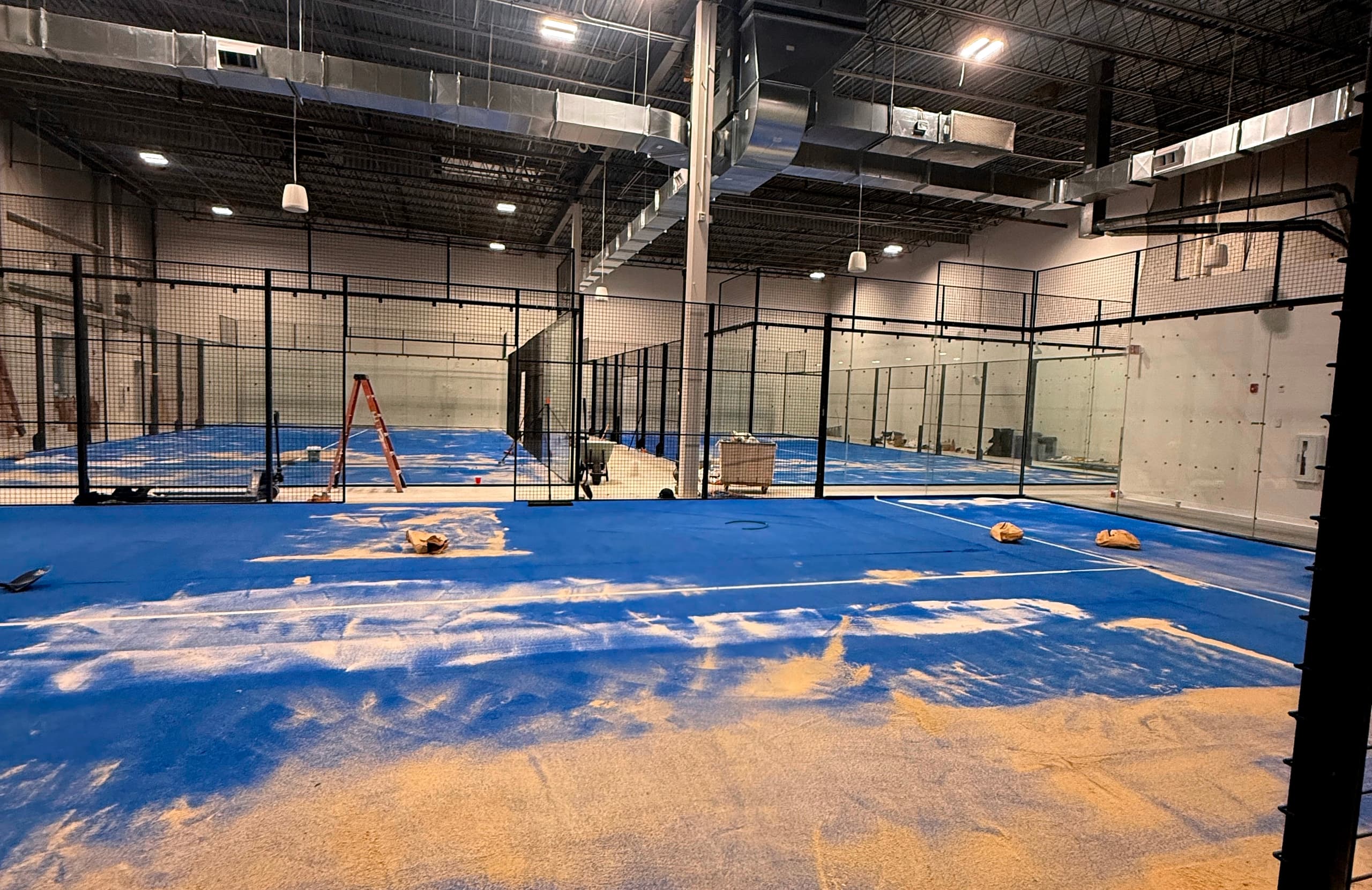
In just a few weeks, The Hive — a Salt Lake City padel club that Hollye co-founded with Daniel Lasso, a semi-pro Ecuadorian soccer player — will officially open on the west side of the city with five indoor courts, showers, a cafe, huge fans, and an air conditioning system that cannot be beat.
Ahead of the club’s upcoming soft opening this Saturday, August 15th, I sat down with Hollye at The Hive and asked her how exactly she became obsessed with padel and what her plans are for the future.
How did you go from falling in love with padel in Europe to building a court at your house to launching a club in Salt Lake City?
I learned to play in Portugal four years ago. I was at an international schooling program there with my kids called Boundless Life. And all the parents would drop their kids off at school, and then we would go to a club and play padel. At first, I was like, ‘what is this sport?’ And they were like, ‘it’s like tennis.’
So I went — and I fell in love with not only the sport but how it brought all of us together as a community. Over the course of three months, I watched these people who had never played a racquet sport before get better, lose weight, become more nimble and more active. It was transformative. Portugal planted the seed.
Then I went to Spain with the same program last spring and started playing again, and it fertilized that seed. I saw the same thing that happened in Portugal happen in Spain. A group of people who didn’t know the sport started playing it, and after just a month, we were all competing in tournaments with each other. Every one of us was hooked and I became the best version of myself.
I realized Portugal wasn’t just a one-off. It was happening again. Two hours of sweaty play made me feel like I was reverse aging. I felt better physically than I had in a long time. I was thinking, ‘We need more of this in the U.S. I want to keep this feeling in my life and I know others do, too. This sport is medicine for the soul.’
I was originally going to start a different business, with the intention of working on it while I was in Spain, but I was playing so much padel and falling in love with the sport again that I couldn’t help it.
You know when that feeling starts nagging at you and you literally can’t stop thinking about something? You know it’s going to take a lot of sacrifice on some level, but you get to the point where you just don’t care.
I kept waking up thinking, “This is going to take so much work, but I have to say yes or no.’ The universe was pushing me in a ‘yes’ direction, and I was just being open to it.
I thought to myself: ‘If certain things come my way, I’ll make this happen, because it’s a giant time and financial commitment.’ After a series of small miracles, I knew I was on the right path.
How did you select the space for the Hive?
Real estate is the hardest part and as everybody knows, it’s the most important piece. It was tricky, because a lot of the newer buildings have gorgeous, beautiful ceilings but their cost is prohibitive and they’re restrictive with buildouts. I want to survive in this business to be able to continue throughout the years. So finding a space that was affordable was key.
I needed to find something that wasn’t a brand new build, where I could cut into the floors. In warehouses, they don’t want you to tear up the floors, which is what you have to do when you want to put in a cafe, showers, etc.
And my thinking was, ‘If I can find a space, I’ll make it happen.’ Luckily, there was a pretty high vacancy rate at the time when I got this (site) and it was a decent deal. So I knew I would be able to stay afloat for a while. It was a year ago, this month, that I found the space.
How did you find it? Just driving around with a real estate agent?
Trial and error. I used to work in commercial real estate so I have a feel for the market. I went on LoopNet, and I was looking within certain parameters of what I wanted space-wise.
The layout was extremely important. I wanted to be able to have run-out space around the courts. The most important things, when I stepped into this were court quality, great coaches, and a good vibe. For me that means music, coffee, and beer.
And coffee can be interchanged with beer, or it can be interchanged with matcha, or can be interchanged with any beverage that allows people to play, stay, and converse. I’m inspired by the culture in Latin America and Europe, where you play and stay for a while. Siesta culture.
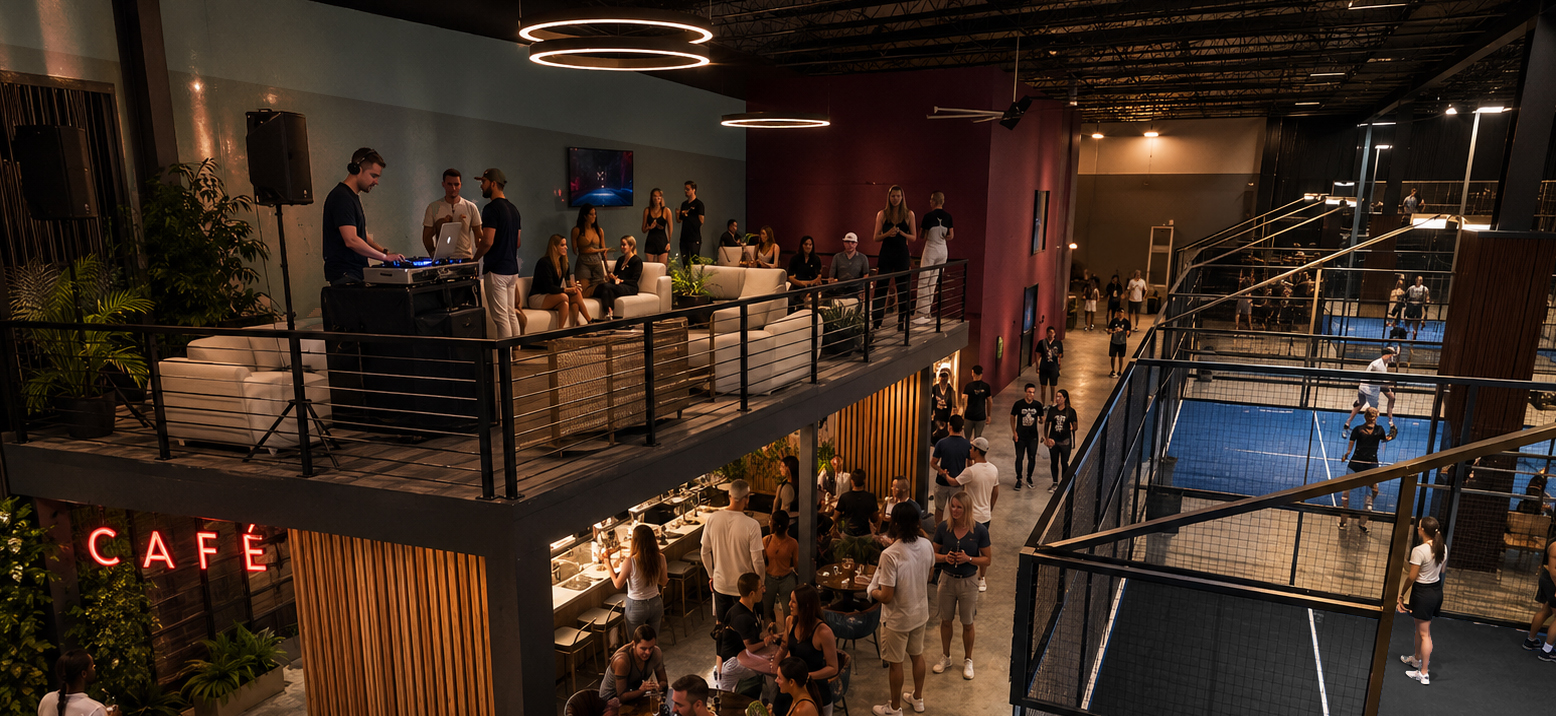
I wanted a space where I could build community, with places where you could commune — like a mezzanine or a cafe. We’re not a ‘hit and run’ facility. I say this a lot when I talk about the club: the idea is not to come, hit, and then run. It’s to play and stay.
So, it needs to be comfortable, it needs to have air conditioning, it needs to have food. It needs to have places where people can hang out.
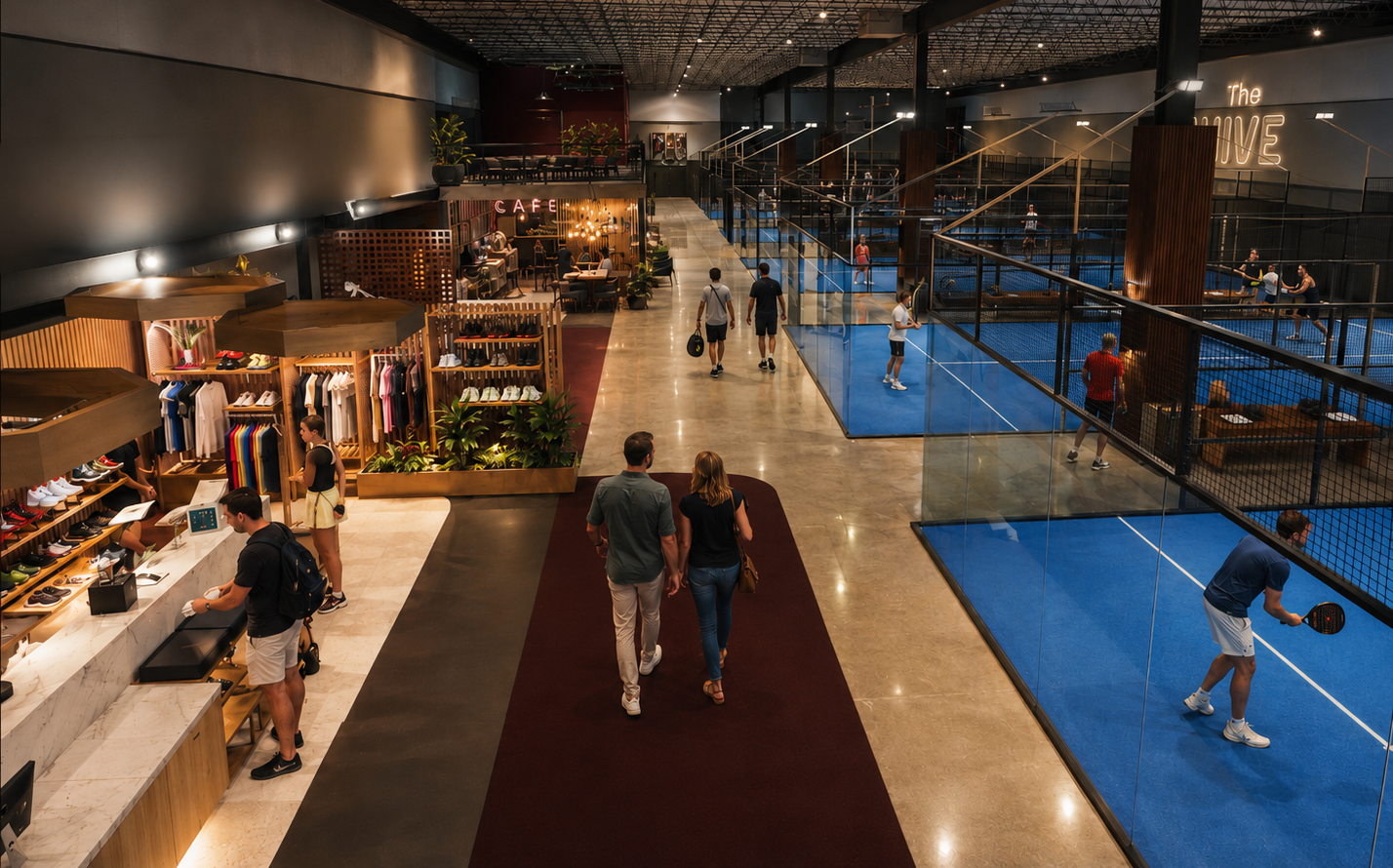
This is a great looking space. It seems perfect. How were you able to get it?
So, nobody wanted this space. It had been on the market for a year. It’s not desirable for industrial use. It only has two bay doors.
And those have since been changed out. The old ones were pretty gnarly. We put new ones in. We called this place ‘the bowling alley,’ because when we first came in, there was long, narrow office space with cubicles. It was pretty nasty. The transformation from a dingy warehouse to this was dramatic.
How did you decide how upscale you wanted to go, whether you wanted the club to have ice baths or whirlpools or whatever?
Yeah, so ice baths are really tricky in Utah. There are certain hoops you have to jump through for ice baths and it wasn’t really a priority for me. I wanted saunas because I love longevity hacks, but I personally don’t like ice baths. They stress me out. So to me, I’m like, ‘Just take a cold shower. We’ll make the water really cold in the shower. Just go jump in there.’
And showers were important because I wanted people to be able to come play and then shower and go to work. I didn’t want people to have to go home. I live 30 minutes away, so I didn’t want to have to go home and shower and then come back.
So you settled on showers and saunas, but no ice baths?
Saunas are just as important as showers, because I’m a big believer in the power of saunas to improve your life. And again, it’s communal. You sit in a sauna, you’re sitting, sweating next to somebody, getting into a conversation. There’s a nice bonding moment you can have there.
I’m trying to find all these spaces where people can bond. The mezzanine can be members only or whatever we end up deciding. And then in the lounge area we’re hoping to do barbecues, so we’ll lift up the bay doors, and we’ll do some barbecuing up there.
For me, the community is the number one part of it, because that’s what drew me to the sport. I was hanging out with all those people in the beginning and falling in love with it. Padel was making us all the best versions of ourselves.
Bringing women into the sport and building a place for them to go is a big issue in U.S. padel at the moment. I’m guessing from what you’ve told me about community that you feel the same way?
I do. That’s why I have a (mural of a) lady on my wall. I’m trying to bring in a feminine vibe. I can tell if a club is female run or where there’s a woman on the board.
I go into their bathrooms and immediately know a woman is involved. There is soft seating, amenities like hair ties, the color scheme is spot on. You can feel the difference.
Some insiders say if you want to open a padel club, it has to be your full time job. Do you agree?
Yes. Because there are too many details. Even just running the Park City court with myself and my friends, I’m constantly scheduling, you know? You have to be on it.
I love this sport, but someone told me, ‘Make sure you don’t fall out of love with it, now that you’re working in it.’
I’m like: ‘I don’t care. It’s so fun. I’m a people person. I love the people. I love the game. I love being active. I love the way I feel when I hit the ball, and I’m building a space that I feel comfortable in that I think people will enjoy.’
The Hive Padel Club will soft open this Saturday, August 15 at 1915 S 4800 W, Salt Lake City, UT 84104. For more information, please visit their website or follow them on Instagram.
If you enjoyed this article, please be sure to subscribe to Padel Nation (for free!) to get exciting updates and important insights on the rapidly emerging U.S. padel scene like this one delivered directly to your inbox 2X weekly — or share it with a padel-playing friend.
Finally, as always, a big thank you to the friends and preferred partners of Padel Nation who help make posts like this possible, including:




Interested in becoming a friend or preferred partner of Padel Nation? Drop us a line here and let’s talk!
Oh, and one other thing… my brand-new 352-page padel book was just released last month. So, if you enjoy the work I’m doing in the U.S. padel space, you can support me by ordering a copy (or two!) online at Amazon or Barnes & Noble.
Or if you’re a club owner and you’d want to carry a handful of copies in your pro shop for “padel curious” people who are interested in trying the sport out but don’t know quite where to start, let me know and I can connect you with my publisher’s wholesale department.
Many thanks in advance!