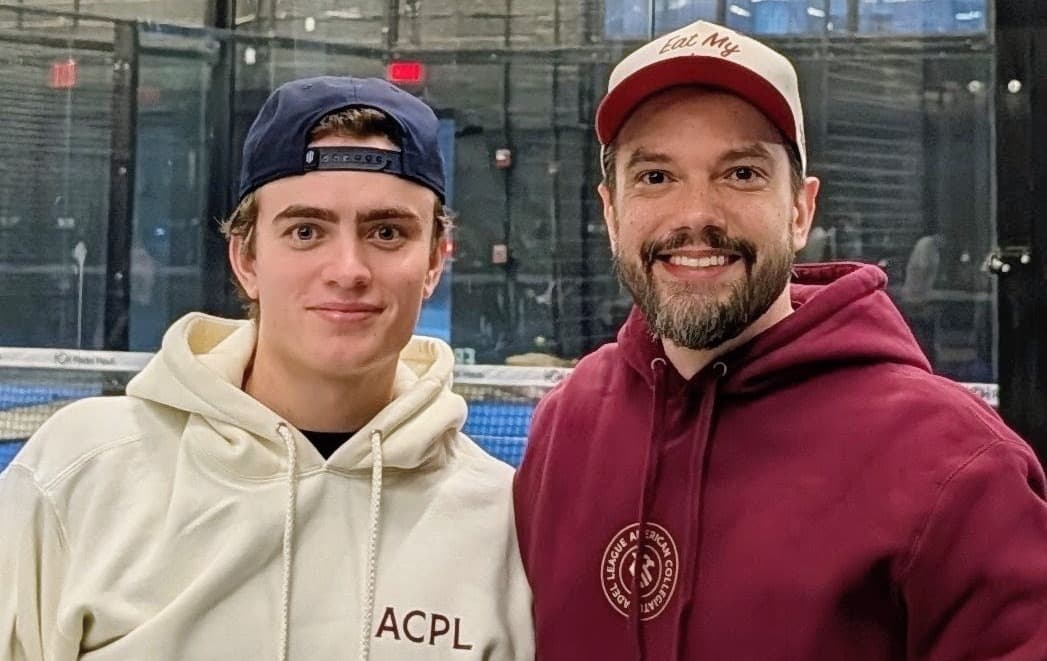
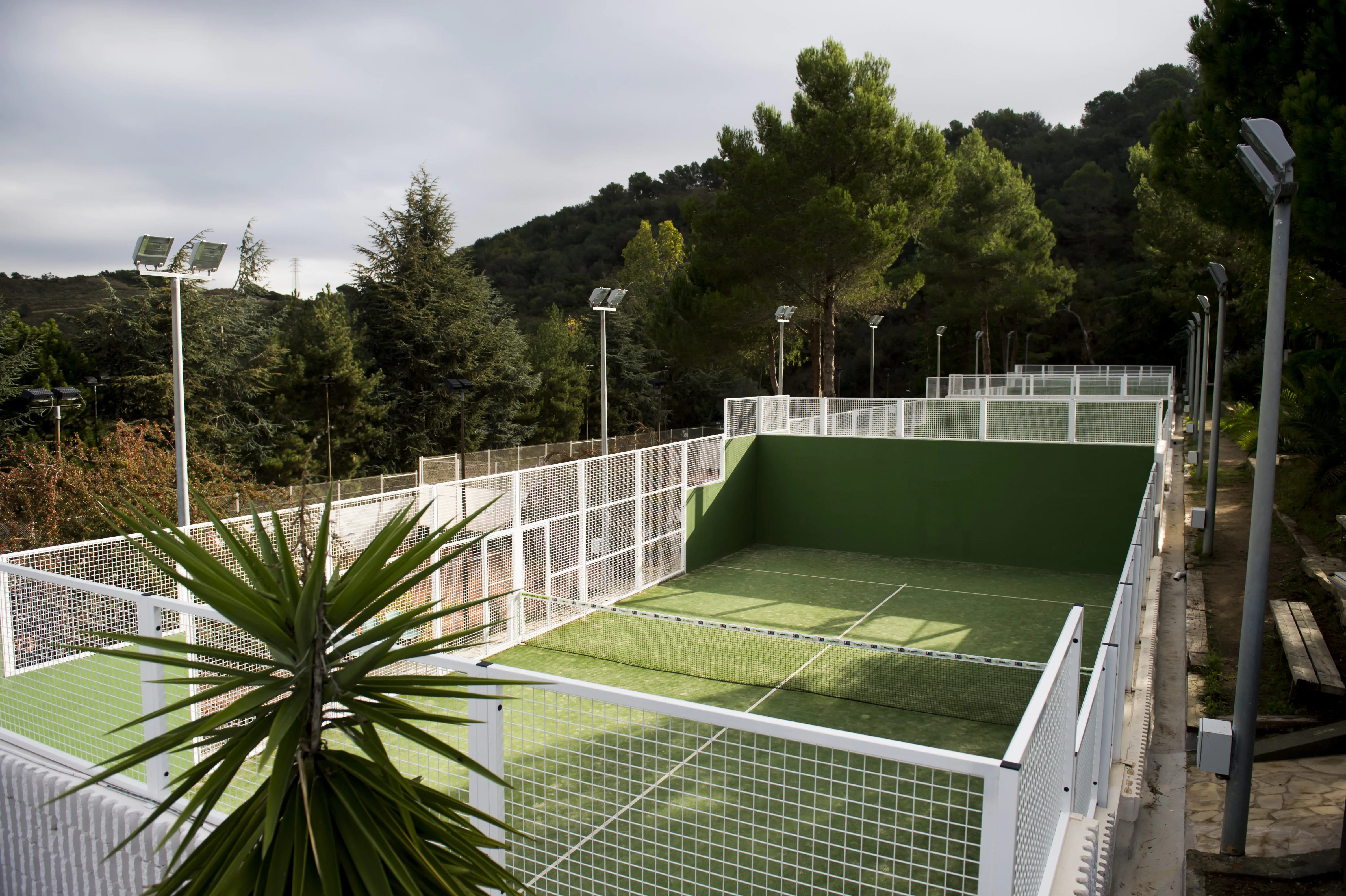
Editor’s Note: The following guest post comes from friend and fellow padel-addict/-scribbler Aris Sevastianos, founder and author of the El Remate newsletter, who has had the rare pleasure of playing padel in more countries than most people have ever even set foot in.
He’s rocked the boat a few times recently with his honest, well-thought-out “hot takes” on why the U.S. padel landscape has a long way to go if the sport is ever going to break out the way it has in Europe, South America, and elsewhere.
So, on a recent impromptu trip to Chicago to play padel in the middle of the winter together (yes, our passion often outweighs our intelligence), I asked him what Americans might find surprising about playing padel abroad. Here’s how he responded…
Howdy! I’m Aris, an American who spent 18 months playing padel everywhere I could find a court across Europe, Latin America, and back home in the States. I lived in Argentina and Spain, but also spent time playing in Italy, Greece, Germany, Bosnia, Panama, Dominican Republic, Serbia, Colombia… the list goes on and on.
Each place had its own flavor, its own quirks, and its own way of approaching the sport. I recently made an Instagram account documenting these distinct experiences here.
Rather than lecture about which is “better” (though I definitely have opinions), I want to use this piece to highlight the cultural stuff that genuinely surprised me - and might surprise you too if you bring your racket overseas.
Here’s what stood out:
1) You Kiss Your Opponents
Many times playing in different clubs across Buenos Aires, I’d meet my opponents (who I’d never met) before the match. While I’d expect handshakes or casual intros, they’d greet me with the classic Argentine right-cheek kiss.
The match, while undoubtedly still competitive, felt warm from the start and made the game feel intimate… almost familial.
2) It’s Their Pickleball Equivalent
Across Europe and Latin America, padel players came from every demographic imaginable.
My Uber driver Javi in Madrid plays twice a week. Grandmothers book weekly matches. Teens squeeze in games after school. It isn’t concentrated in one profession, income bracket, or archetype of person. Put simply, it’s affordable and accessible.
Most places operate on pay-per-play models. No memberships required. You book a court for 90 minutes, show up, play, hop off for the next group of four, then recap the match and shoot the shit over a local beer.
The barrier to entry is low, so naturally the player pool is massive. Which means finding games at your skill level during convenient times is much easier.
3) They’re Facilities, Not Clubs
This is a semantic thing, but it matters. In every place I played, calling them “clubs” doesn’t quite fit. They’re facilities.
A club implies membership, and a certain type of person who belongs. A facility is just a place with courts. You show up, you pay, you play.
I genuinely struggled to find membership-based padel clubs across these 12 countries I played in. They might exist somewhere, but they’re certainly not the norm. When the sport is common enough, the pay-per-play model works perfectly fine.
It’s just a different approach to how the sport is accessed and experienced.
4) Socialization with Strangers Is the Norm
While I haven’t (yet) played in Brazil and Paraguay, my buddy David (who I met while living in Buenos Aires) would show me these facilities with dedicated asado areas where you cook meat and drink beer with the people you just played with. There, it’s literally part of the infrastructure.
But the post-match hangout culture extends beyond just those countries. Across Europe (particularly Spain / Italy / Greece) and Latin America, staying after your match to socialize is standard.
While, sure, this still exists (mind you, to a lesser extent) in the US, I’d find that key difference abroad is who you’re socializing with. In the States, a post-match hangout (if any) disproportionately happens within a group that already knows each other. Abroad, it’s completely normal with total strangers. I’d show up solo, play with three people I’d never met, then spend two hours with them afterward drinking and talking about anything. It was completely normal to turn a pickup game into an entire evening of conversation, often followed by the swapping of WhatsApps with plans to run it back.
The sport is unquestionably a social ritual beyond exercise and competition. I never experienced anything like it in the other sports I grew up playing.
5) Worlds Collide
I’ve played matches where my partner was a CEO and our opponents were a construction worker and a college student. Doctors playing with delivery drivers. Lawyers with jewelry salesmen.
Compared to the US, where padel demographics skew heavily toward late-20s to 50-something urban professionals, padel abroad pulls people from wildly different socioeconomic backgrounds into the same ecosystem.
And I love it because you get perspectives outside your bubble. For 90 minutes, you compete, laugh, sweat, and connect with people you’d probably never meet otherwise. Padel creates these small micro-communities and friend groups almost instantly.
6) Youth Development Is Ubiquitous
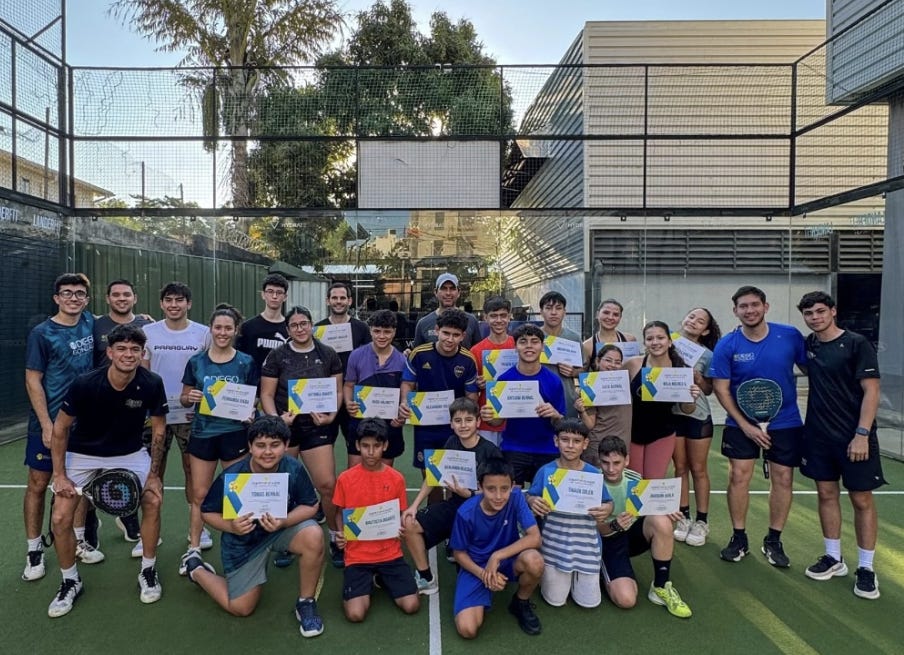
Walk into a facility in Europe or Latin America and you’ll see kids as young as six or seven on the courts.
Youth programs, junior leagues, and tournaments are incredibly common, and there’s real infrastructure and pipelines designed to get kids into the sport early.
Kids grow up playing, develop serious skill by their teens, and the overall level of play rises across the country. You can feel it in the depth of competition, especially in places like Spain and Argentina (peep this video, for example).
7) Padel Is Rural (& Can Be in the US, Too!)
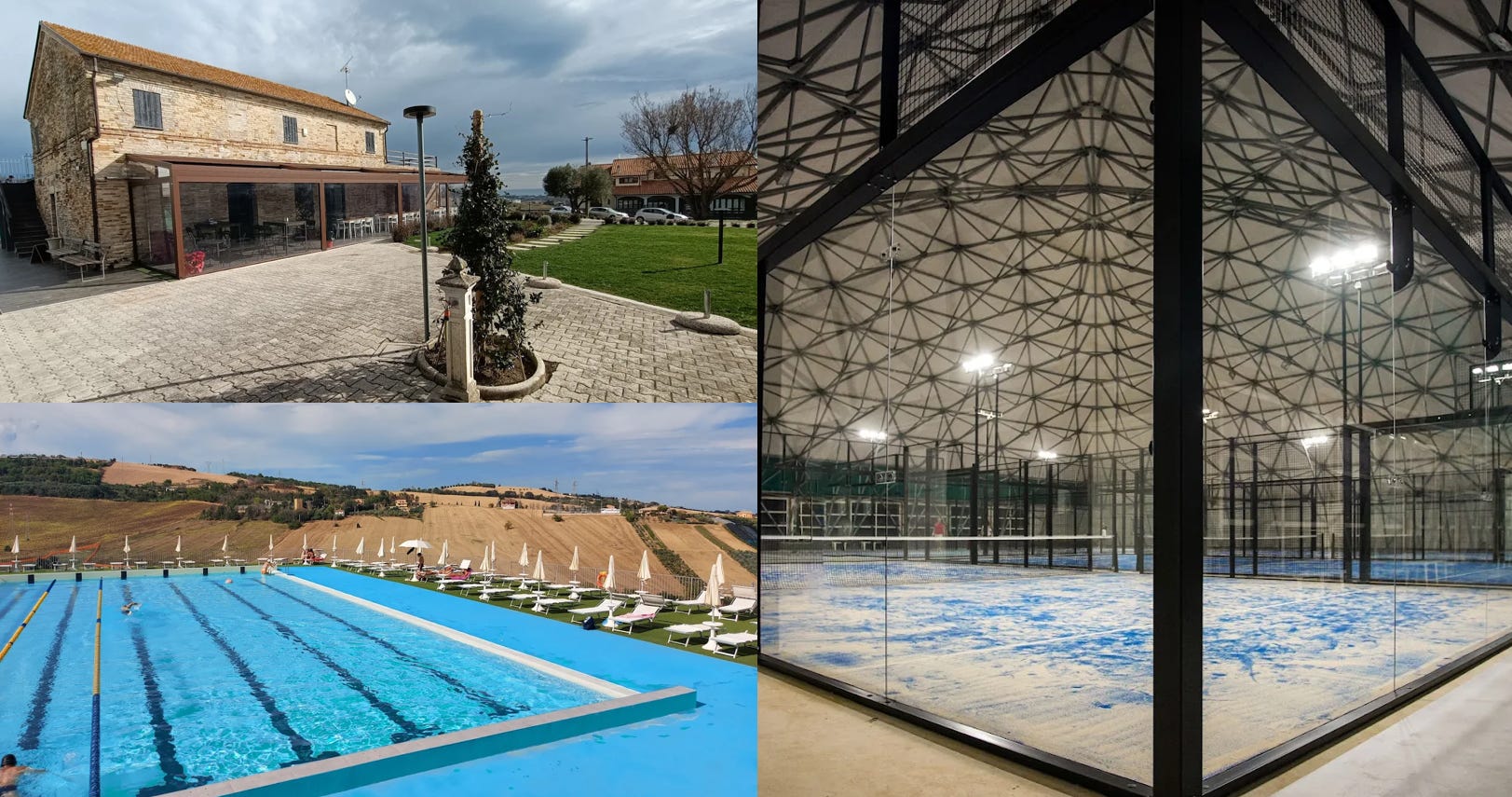
When visiting my cousins in small-town Italy, I was quite positively surprised to find an abundance of padel courts. Over time, I noticed that tons of other countries have courts in rural areas. I thought this was really cool to see, and this observation came full circle during a recent visit to Goshen, Indiana (a small northern Indiana town), visiting the first U.S. domestic padel court glass manufacturer.
They’d built a demo court in their warehouse. Word got around town (naturally), and people started showing up wanting to try this weird sport they’d heard about.
The response was immediate and enthusiastic. People loved it. The demand was so strong that the manufacturer’s founder bought 40 Blanca Padel rackets of because he knew he’d sell them quickly to the locals who wanted to keep playing.
To me, this was shockingly un-shocking. Even small-town rural Indiana loved padel just as much as cosmopolitan Berlin or Buenos Aires. Regardless of your background, when you actually try it, you get hooked.
The sport just needs to be accessible. The appetite is there.
8) Instantly Hopping in on High-Quality Matches Is Frictionless
Full disclosure, I’m not being paid to say this. I have no affiliate deal or sponsorship. I’m just sharing what genuinely worked well for me as a player traveling around Europe.
One of the biggest game-changers for me while traveling in Europe was Playtomic.
If you haven’t used it, it’s an app that lets you find open matches at your skill level with people you don’t know, in almost any city.
Here’s what it looked like in practice:
I’d land in Berlin not knowing anyone. I’d open the app, find an open match nearby with players around my level, book in, and show up. Done.
After the match, your rating algorithmically updates based on results and partner / opponent quality. Over time, the matchmaking gets smarter, and you get slotted into increasingly accurate games. The rating system also adds a competitive element that makes the app more engaging and addicting.
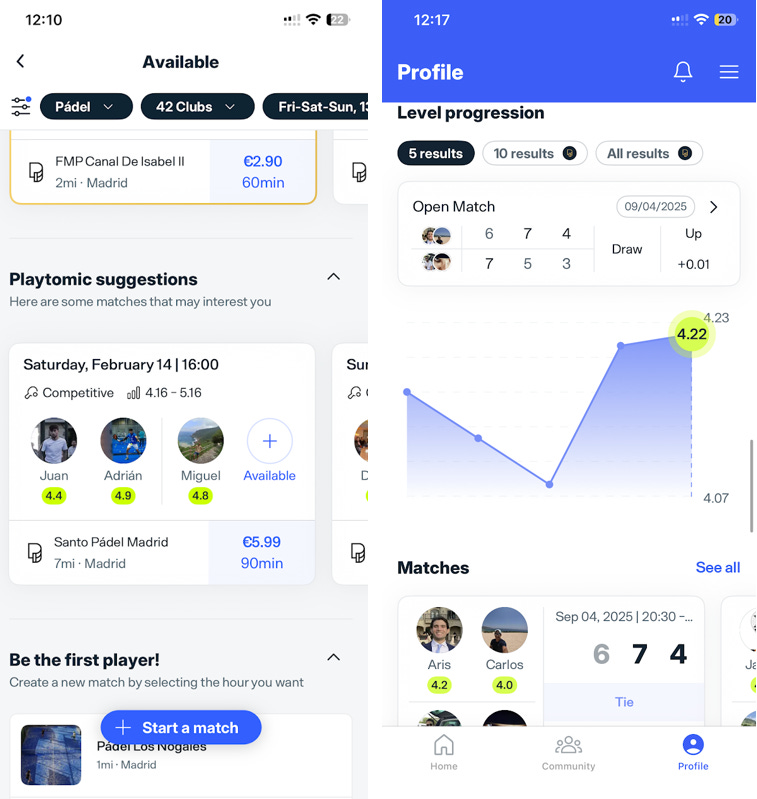
It’s hard to overstate how frictionless this is compared to the U.S.
In many American clubs, you still have to “know the right people” to get good games. Many clubs don’t assign ratings to each member, nor do members record scores from their matches. Instead of being able to jump into competitive matches right away, you have to work your way into the right circles over a long time (I’m talking several months, minimum). It’s messy and adds tons of unnecessary social drama into the mix.
What I Took Away From All This
Playing padel across 12 countries showed me just how differently the sport can be experienced depending on culture, infrastructure, and access. A lot of what I found abroad caught me off guard, but it also made me optimistic.
There’s massive potential for padel in the U.S. After all, we’re a country of immigrants and regional cultures, which means we can borrow the best elements of what’s worked elsewhere and build something uniquely American.
As I continue building El Remate, my goal is to share the same joy I experienced abroad by getting more people on the court, sweating, laughing, and connecting over this weird, beautiful game.
Enjoy this post? If so, please subscribe to Padel Nation to get exciting updates and important insights on the rapidly emerging U.S. padel scene delivered directly to your inbox — or share it with a padel-playing friend.
Finally, as always, a big thank you to the friends and preferred partners of Padel Nation who help make posts like this possible, including:


Interested in becoming a friend or preferred partner of Padel Nation? Drop me a line here and let’s talk!