Editor’s note: The following (lightly edited) feature article is the ninth installment of our “How I Became Obsessed With Padel” series from regular guest contributor Scott Matulis, a leading West Coast padel writer whose work you can find in numerous racquet-sports publications, including his own padel Substack.
If you follow U.S. padel, you’ve no doubt seen the recent announcements about the launch of the American Collegiate Padel League (ACPL).
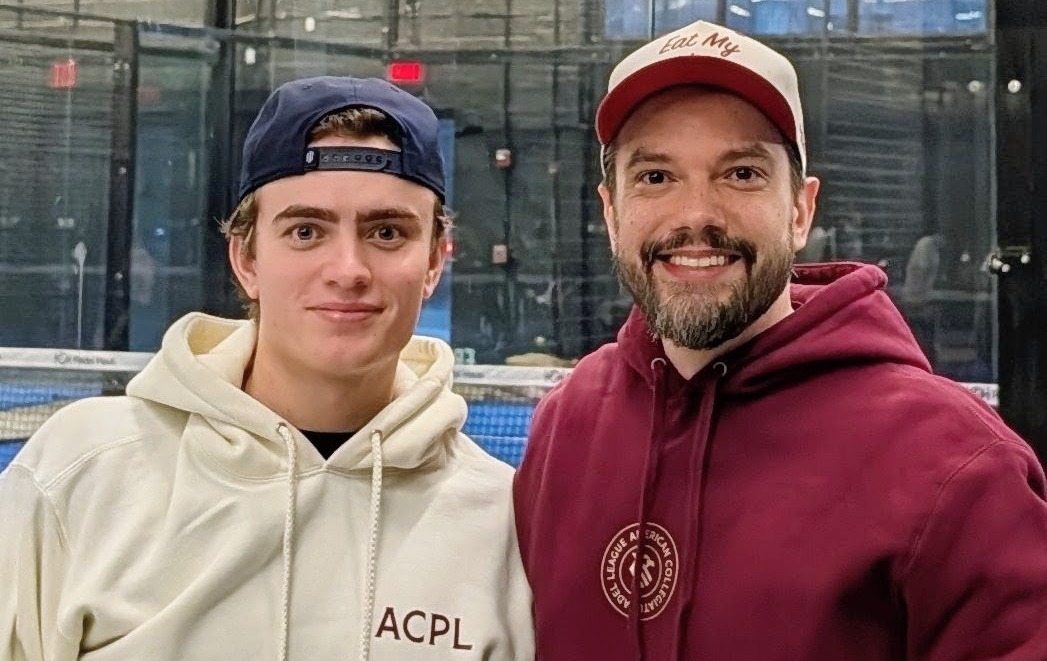
The league was the idea of two smart guys, Matthew Jenkins, who just graduated from college and is already making moves and Antonio Goes, the Brazilian-born padel entrepreneur responsible for player community Padelpalooza and padel software company Courtr.
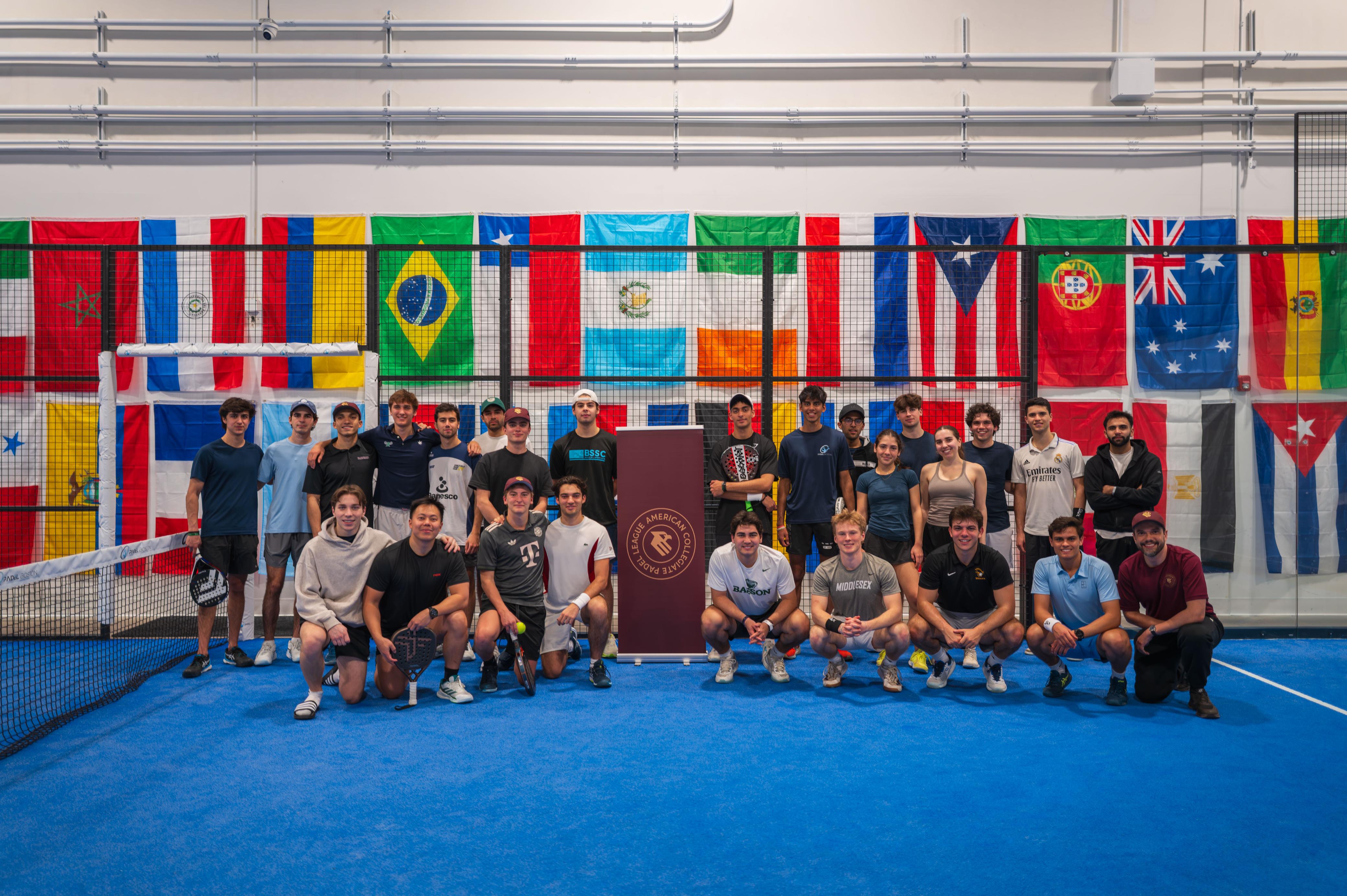
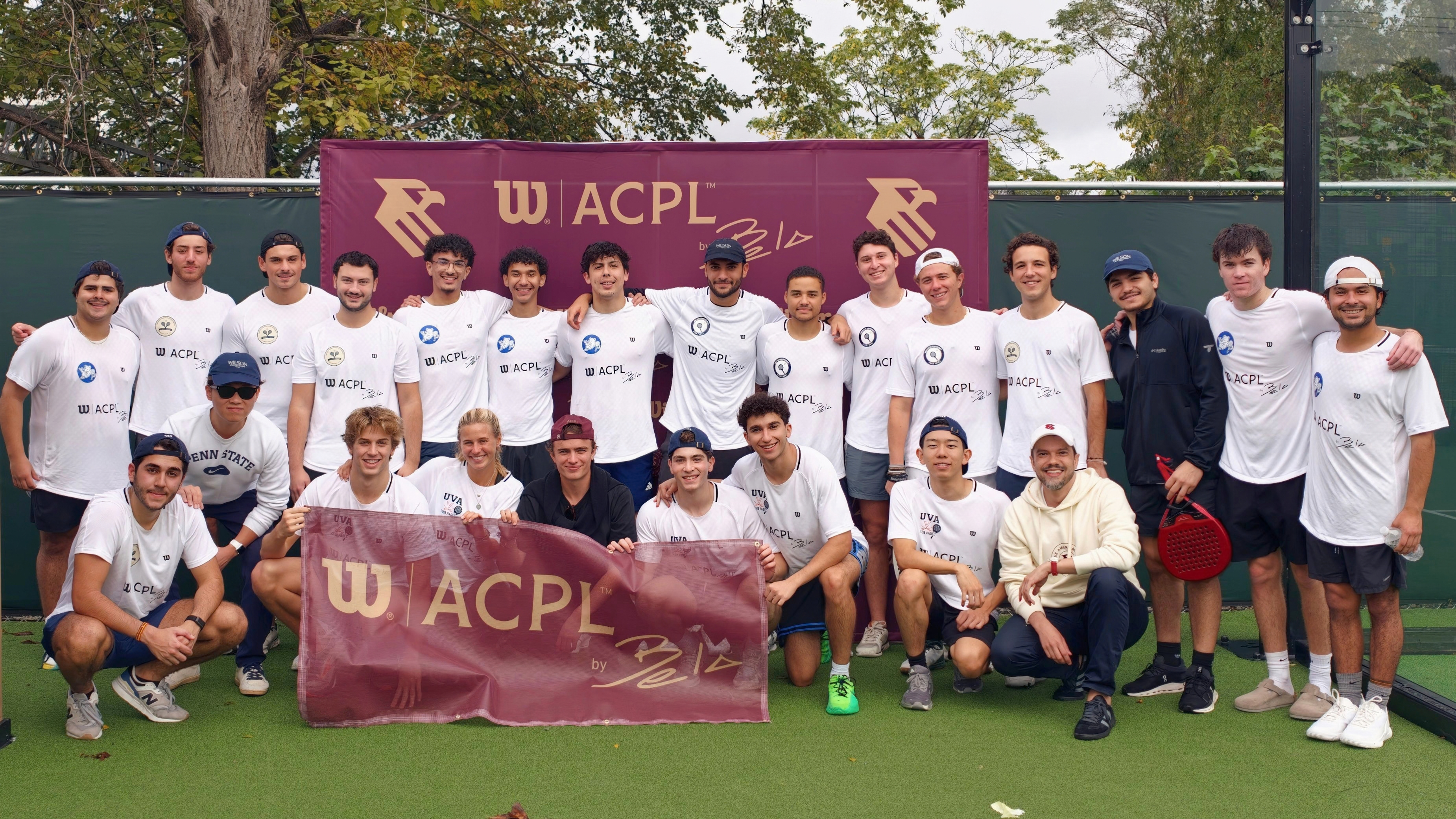
The two founded the ACPL in 2025 and held its first event in February 2026, bringing students from seven universities. The 2026 season (which has expanded to 45+ college teams and 200+ collegiate players) runs this fall across four regions with the national finals slated for March 2027.
The huge recent news is that both Wilson and padel GOAT Fernando Belasteguin are now on board as sponsor and lead ambassador/advisor, respectively. The tour has been rebranded the Wilson ACPL by Bela, which is sweet.
I recently had a chance to talk to both Jenkins and Goes for this first-ever two-person edition of our “How I Became Obsessed With Padel” series, and perhaps not surprisingly, the first thing I wanted to know was how two guys starting a college league got Bela to sign on.
How did you get Bela to hook up with you guys? I’ve seen coverage of the relationship, but nothing on how it came about — so, how did that happen?
Goes:
It all started at the Miami Premier Padel P1. Marta Cros — who, by the way, just joined our board of directors — introduced me to Bela during the event.
And I kid you not, it was maybe 30 seconds of conversation. I barely finished explaining what we were building and he was like, ‘I want to do this.’ He just got it, right away.
But at that point it was just a conversation, right? It really came together when Wilson entered the picture and we saw the opportunity to bring it all under one roof — the brand, the ambassador, the league. That’s when it became real.
And from there it took months to align everything — the different teams, the companies, the contracts. It was not simple at all. But knowing from day one that Bela believed in the mission made the whole process worth it.
Wow, that’s top notch. So what exactly is he going to do specifically? Is he going to be showing up at colleges?
Goes:
He’s going to be a really important pillar of the mission. His goal is to help develop this sport in the same way that we want to do.
He’s really interested in traveling here, meeting those kids, and not only supporting them with a platform or a program to help them play better and with coaches and better professionalism in padel in general, but also helping develop the performance mindset of those kids and enable them to have the same life-changing opportunities he had.
How did each of you discover padel and eventually decide, “Oh man, this is something I want to do full-time?”
Goes:
For me, it started with a person, actually. I have this good friend, Edu Diverio. He’s Brazilian. He’s been playing padel for his entire life. He comes from the south of the country, unlike me, in São Paulo. I had never heard about padel until moving to Miami and meeting him.
He was always chatting about padel, padel, padel. I was like, ‘What is that?’ And he convinced me to go and play. So I took my first class and I could never leave the court again. That was like four years ago at Reserve Seaplane.
And then, a couple of years later, I moved to New York, and we only had Padel Haus Williamsburg. It was starting. They didn’t have a community. I didn’t have any friends because I recently moved to the city.
So I started playing and I met as many people as I could, and then I started identifying those gaps: ‘Hey, we need people to play together. All these people here, they want to make friends.’
New York is very transitional. People come here, stay for a while, make their career and leave. So people here are always willing to meet new people, make new friends. That’s when Padelpalooza started. And that’s how I got into padel.
But the more I played, the more I kept seeing gaps — clubs had no real way to manage their communities, players had no easy way to connect with each other, tournaments were managed manually —everything was scattered.
So I built Courtr, a software platform for racquet sports. Then came PadelPalz to get little kids into the sport, and then Matthew and the Collegiate League. By that point I’d quit my tech career to focus on padel 100%.
Matthew, what about you? How did you start with padel, and when did you decide that you were obsessed with it?
Jenkins:
I’m based in Philly right now, which is obviously an incredible spot for racquet sports – tons of history, awesome players, great country clubs. I grew up playing tennis, and when I got to Drexel, which has a huge squash culture, I picked up squash too. Basically, if you have any athletic background at Drexel, you play squash all winter when it’s too cold for outdoor sports.
And about two years ago, when I was a junior, a few of my tennis and squash buddies were like, ‘Hey, there’s this new sport called padel out at PADELphia in Bala Cynwyd. Let’s go check it out.’
So a group of us went out on a freezing Wednesday night in the middle of winter, and that two-hour session literally changed everything. I don’t think any of us have played a single game of recreational tennis or squash since that night. It’s been 100% padel. And once your main crew shifts to a new sport, that’s it, you’re locked in.
Over the last two years, Philly went from one public club to eight. It’s just taken the area by storm. But early on, my friends and I noticed we couldn’t find anyone our age playing. So we started this group called 4030 to get college kids into it.
We’d reach out to teams at schools like Penn, Drexel, Villanova, bribe them with free Saturday morning breakfast, and run pop-ups and mini tournaments to get them on the court for the first time.
Eight months into that, I met Antonio in NYC and we were off to the races building something much bigger to capture the collegiate padel opportunity.
On top of that, I’m part of a group called POP Padel. We basically run a mini incubator for padel courts by taking old, underutilized tennis courts at existing athletic facilities and paying to install padel courts there. We just built three courts in South Jersey, we’ve got three more going up in West Chester, PA, and another one down in Ventnor, NJ, with several other projects in the pipeline.
So yeah, I’m playing across all those courts right now — trying to get out there at least three times a week because, honestly, with everything we’re building, Antonio and I actually need to be prepared for when we’re challenged on court!
How do you fund POP Padel? Is it just individual investors?
Jenkins:
We’ve built a really solid network of racquet-sport guys — some are directors of racquet sports at country clubs, some own facilities themselves, and a few high-net-worth individuals, mainly based in the Philadelphia area.
It’s all on a deal-by-deal basis, but honestly, raising money for this has been remarkably easy. People just get it. They have huge conviction in padel, even if they haven’t played much themselves, just based on everything they’re seeing and hearing about how fast the sport is growing.
So whenever we go to our group with a new project, they’re just like, ‘Yep, let’s do it. Sign us up.’ We can literally raise enough capital to build a couple of courts in about a week, which makes this whole process insanely exciting.
Antonio, you’ve got so much stuff going on. Are you able to play at all these days?
Goes:
I try my best. I always joke that back in my tech days, I used to play more padel than I do now that I work with padel. But I try to be at least once a week on the courts. When I can, a little bit more. But I’m not going to lie, I miss it.
What are you guys going to have to do to make this collegiate padel league successful? What are your marching orders to follow to get it off the ground and popular?
Jenkins:
From my perspective as someone who just graduated, the most important piece is having the end customer — the student — directly involved in the process.
The moment a student feels like they don’t have skin in the game or the freedom to give us honest feedback — like, ‘Hey, I didn’t like how this tournament ran,’ or ‘I don’t agree with this rule’ — that’s when you lose them.
A lot of these kids who started padel clubs on campus — and we’re at 45 schools now, which is way more than we expected for year one — are treating these clubs like their very first business. It’s essentially a startup for them. They’re handling sales, recruiting new members, negotiating court time with local facilities, ordering merch, and picking the competitive roster. Because of that, they’re deeply invested in everything happening in the college padel space.
So with something as big as ACPL, having as many touch points with these kids as possible is crucial. I’m talking to students all day long — getting their input on decisions and seeing if they have connections in markets we haven’t tapped into yet.
I’m sure Antonio can build on that, but at the end of the day, it’s about never losing sight of who your customer is. For us, that’s the students, so keeping them fully involved every step of the way is everything.
What’s the club side of it? What’s your pitch to the host clubs?
Jenkins:
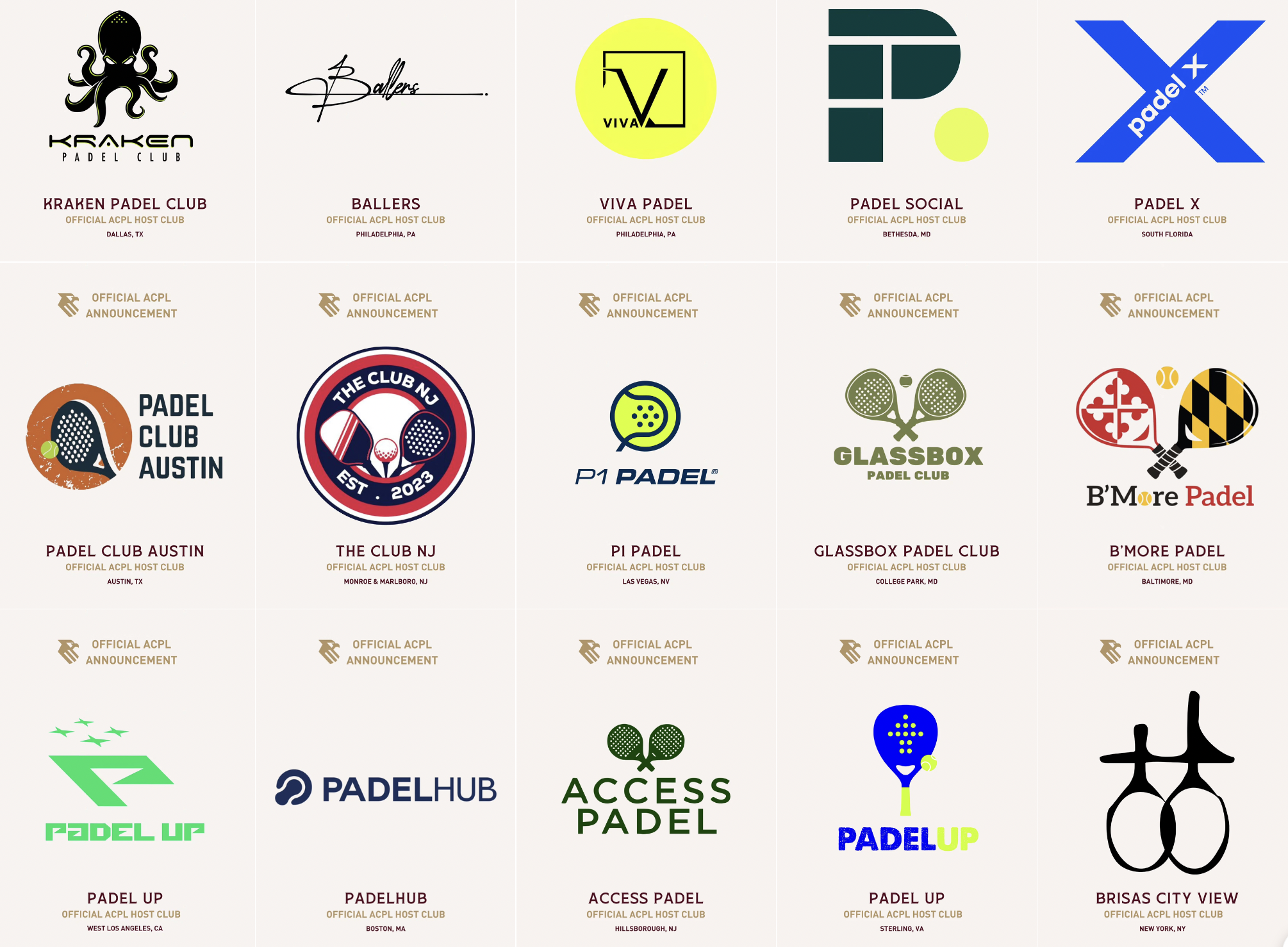
On the club side, we’ve seen nothing but open arms from owners and managers.
Because when you think about how padel grows long term — not just over five years, but 50 or 70 years — you need multiple generations of players who want to compete, take it seriously, and make it their main hobby or sport.
Club owners get that. And the most logical next step for them is tapping into college students. College schedules are super flexible, so they can play at times other members aren’t, and they’re just a fun crowd to have around the facility.
Plus, college kids are insanely active on social media, which is a huge bonus for these clubs. If you bring in your average 40- or 50-year-old member, they’re probably not posting on Instagram or TikTok every time they play. But an 18- or 20-year-old will post every time they’re at the club, which in turn is just UGC for the club to use. That’s a massive marketing lever these clubs are starting to recognize.
So yeah, the reception from club owners across the board has been incredible, and it’s been awesome working with all of them.
Goes:
I’m going to add that, on top of everything that Matt said, one thing that helps us a lot is the mission.
And by the mission, ACPL is the product of ACPA, which is the American Collegiate Padel Association. So we are a nonprofit. And the league is one of the products that we have to make sure those kids have a goal, they have a competition, they have fun, they have something to aim towards.
But the whole mission and this whole work that we do on a daily basis is part of the association mission to grow the sport, to help those students create those clubs in their universities, to get awareness, and most of all, in the future, to be able to provide scholarships to students as we create the pipeline, right?
And why I say that this was the most important thing is that since we are a nonprofit, we don’t have any cash interests or personal interests or any conflicts of interest that can mess up the mission.
It’s different when you create a private league or a private company, where you have a cap table and financial returns you have to deliver.
We are doing this because someone had to do it. Someone had to think about the growth of the sport in a way that ‘This must be done,’ and not ‘How much will I earn from that?’
For more on the ACPL and their 200+ student athletes competing on 45+ college clubs at 16 official host venues across 15 cities and counting, please be sure to visit their website and/or follow them on Instagram.
If you enjoyed this article, please be sure to subscribe to Padel Nation (for free!) to get exciting updates and important insights on the rapidly emerging U.S. padel scene like this one delivered directly to your inbox 2X weekly — or share it with a padel-playing friend.
Finally, as always, a big thank you to the friends and preferred partners of Padel Nation who help make posts like this possible, including:





Interested in becoming a friend or preferred partner of Padel Nation? Drop us a line here and let’s talk!
Oh, and one other thing… my brand-new 352-page padel book was just recently published. So, if you enjoy the work I’m doing in the U.S. padel space, you can support me by ordering a copy (or two!) online at Amazon or Barnes & Noble.
Or if you’re a club owner and you’d want to carry a handful of copies in your pro shop for “padel curious” people who are interested in trying the sport out but don’t know quite where to start, let me know and I can connect you with my publisher’s wholesale department.
Many thanks in advance!