
Over the past few years, there have been plenty of headlines in the U.S. padel world featuring sky-high, dubious-at-best predictions about the number of padel courts we might have in the U.S. come 2030.
Yet for all the hoopla surrounding that topic, there have been far fewer stories about the boots-on-the-ground court builders who are actually putting these courts up and what they’re seeing from the inside out in this industry.
So, when my fellow American Collegiate Padel League (ACPL) advisory board member, Eric Loftus — who is also the founder of Northeast Padel, a partner at Padel Solutions Group, and an advisor to Sportsfield Specialties — recently mentioned his company had just installed their 100th padel court in the U.S., I sent him a long list of questions I hoped he and his team could answer.
And as you can see directly below, with the help of Sam Markle (who serves as National Sales Manager for Sportsfield Specialties), they thoroughly got all of my questions answered and more.
Here’s what I asked — and learned:
Of the first 100 courts you constructed in the U.S., how many different projects were there, across how many states, over what time frame, and what was the split of private versus public? Also, what was the largest project?
Our first 100 courts were installed across approximately 50 projects in 12 states over a year and a half, with roughly 75% of those projects being private developments.
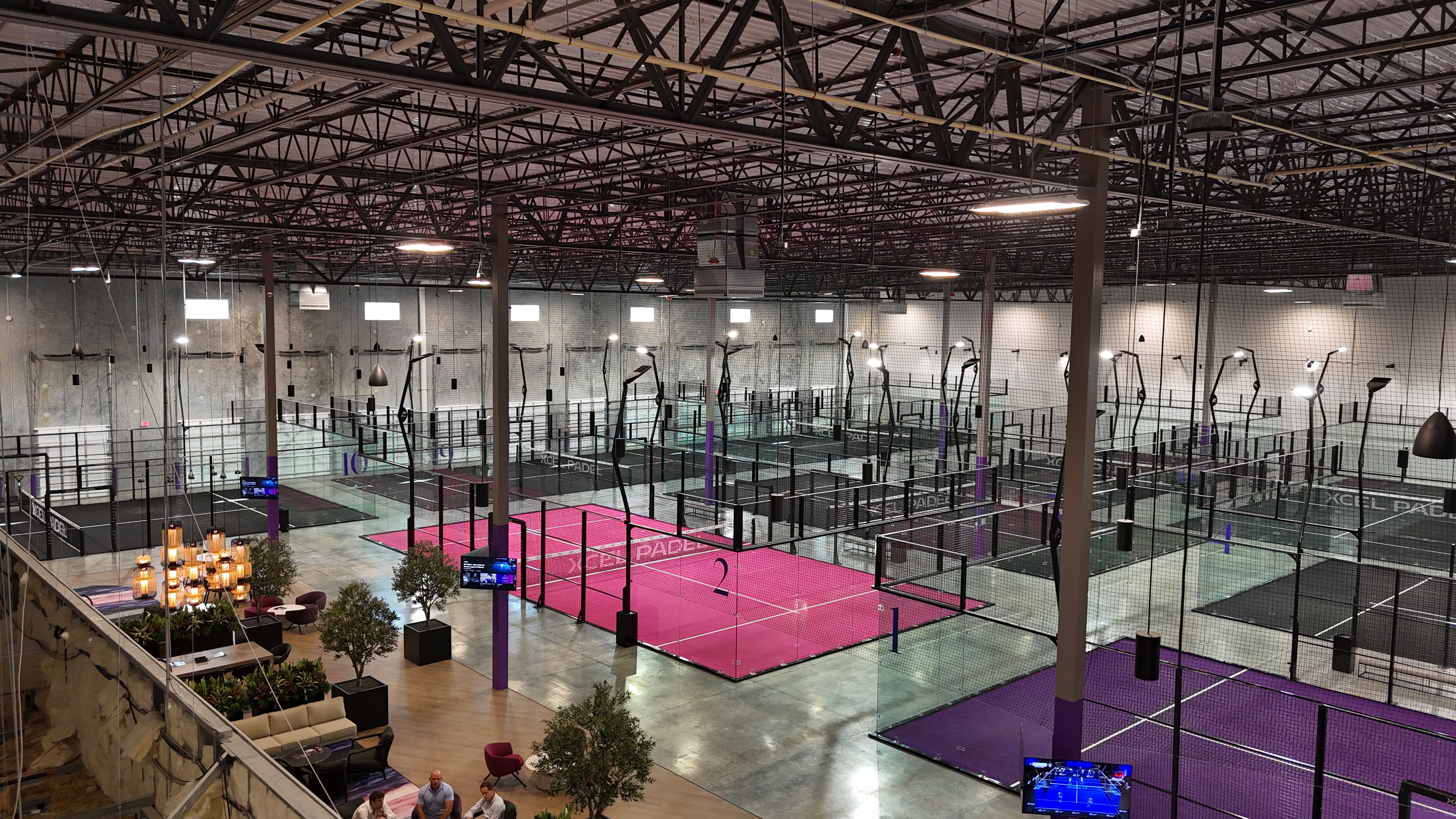
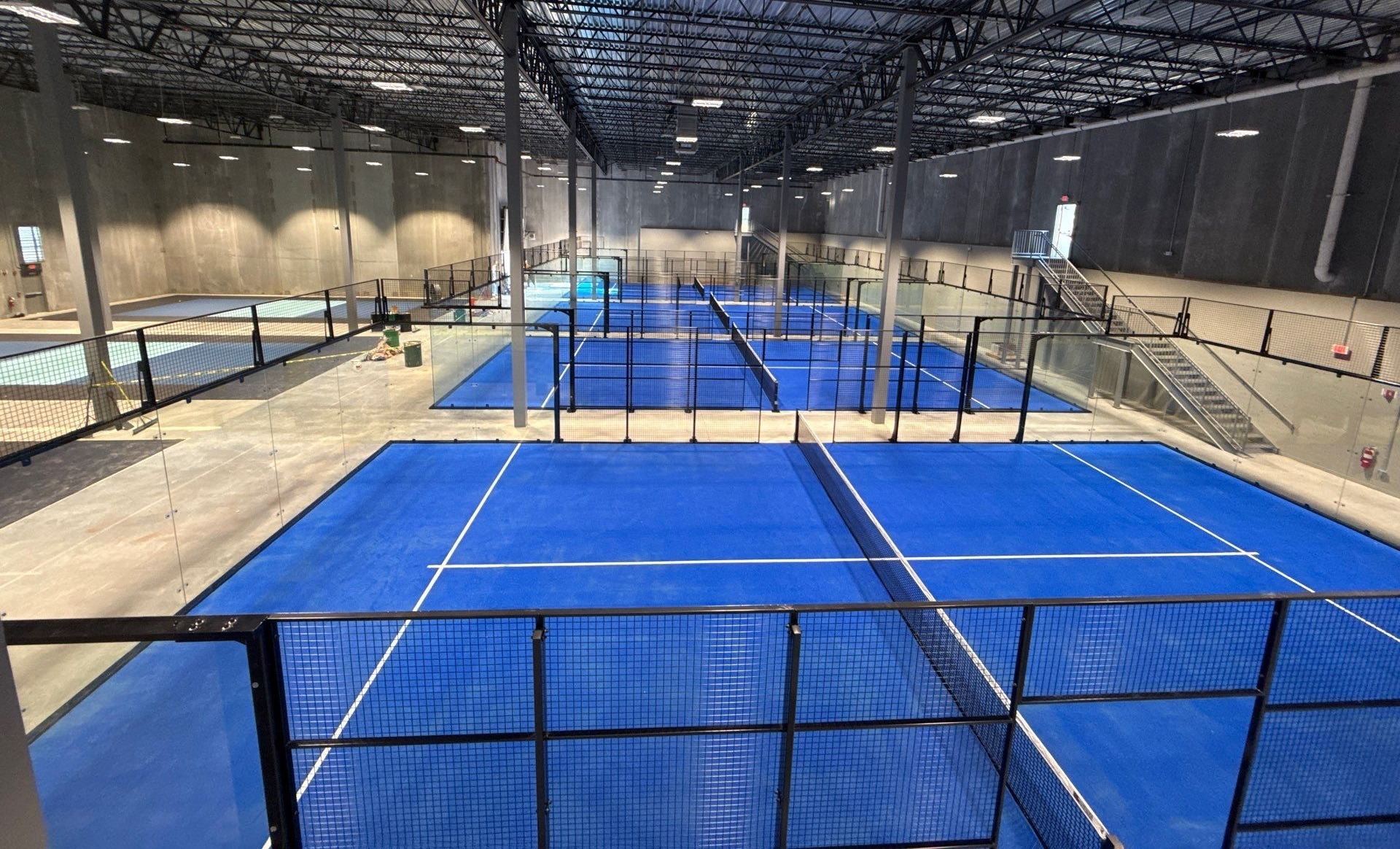
Our largest project was Xcel Padel in West Palm Beach, Florida, where we supplied and installed 22 indoor courts across two locations. More commonly, we see multi-court projects ranging between four and six courts per job.
What was the most memorable project, the most challenging, and the one you’re most proud of?
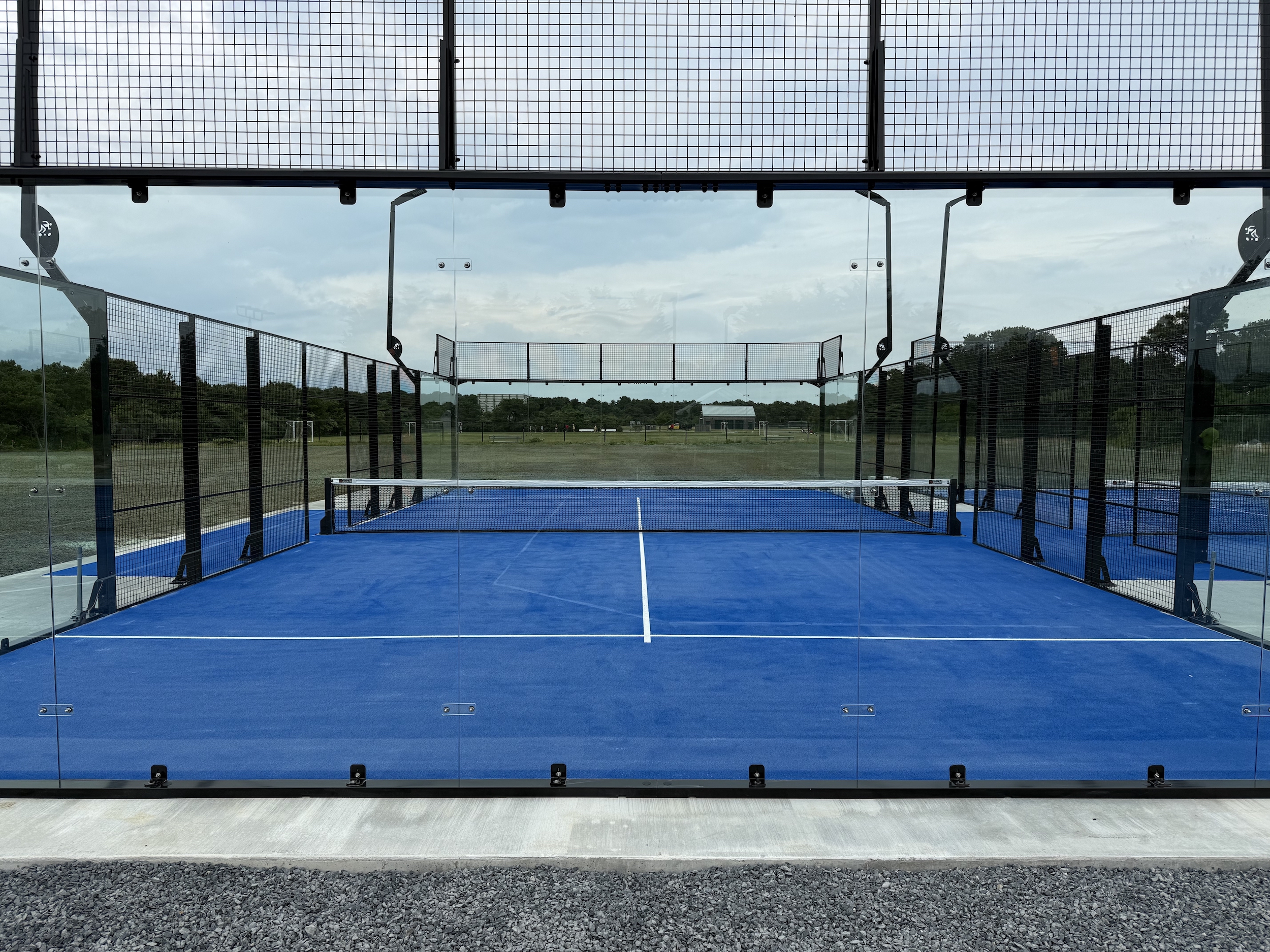
One of our most memorable projects was the construction of two outdoor padel courts at the Nantucket Racquet Sports Association in partnership with Northeast Padel.
Building on an island presents unique logistical and construction challenges, making the successful completion of this project especially rewarding. Working closely with Northeast Padel and leveraging their local experience, knowledge of Nantucket’s building codes, and familiarity with the island’s construction requirements helped streamline the process and ensure a safe, efficient build. What makes this project particularly meaningful is that the courts are open and accessible to the public, helping to grow the sport in a community often associated with exclusivity.
The Nantucket community has enthusiastically embraced padel, and it’s been exciting to see the courts become such a popular addition to the island’s recreational offerings. With demand continuing to grow, we’re looking forward to building additional courts next year to expand access and keep pace with the community’s enthusiasm for the sport.
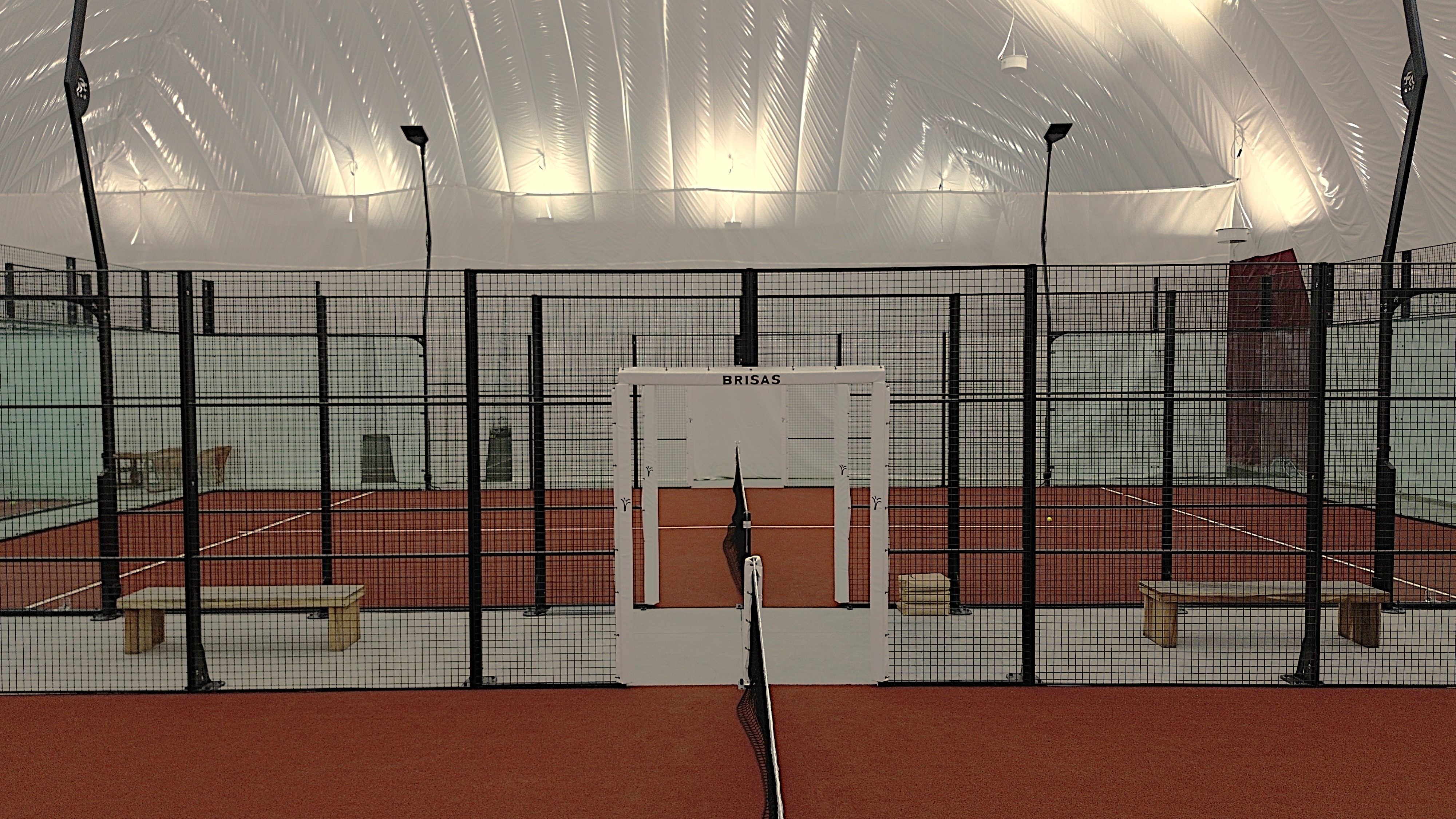
Another memorable project was at a club called Brisas in New York City, located at CityView Racquet Club. We installed five indoor padel courts on the third floor of an existing racquet facility, underneath an air-supported bubble and replacing existing har-tru tennis courts. We started with three padel courts and the demand was so high that we added two more padel courts the following season.
As you can imagine, building courts in that type of environment requires a tremendous amount of planning, coordination, and creative problem-solving. It’s not your typical construction site with easy access.
What makes Brisas particularly memorable is the club itself. It’s one of the premier racquet destinations in New York City and has hosted some incredible padel events around the U.S. Open and they host many high-level tournaments. Seeing our courts become part of that community has been extremely rewarding.
What were the biggest mistakes you made while building those first 100 courts, and what lessons did you learn?
We’ve learned a tremendous amount through our first 100 courts, and I think it’s important to be transparent about that. Anytime you’re introducing a relatively new product into a rapidly developing market, there are going to be challenges that you simply can’t anticipate until you have real-world installations and customer feedback.
One of our biggest lessons was recognizing that a successful court design isn’t just about structural performance or aesthetics. It’s also about drainage, durability, installation efficiency, and long-term maintenance.
We took those lessons seriously and introduced a significant redesign of our court system in January 2026.
Some of the most meaningful improvements included:
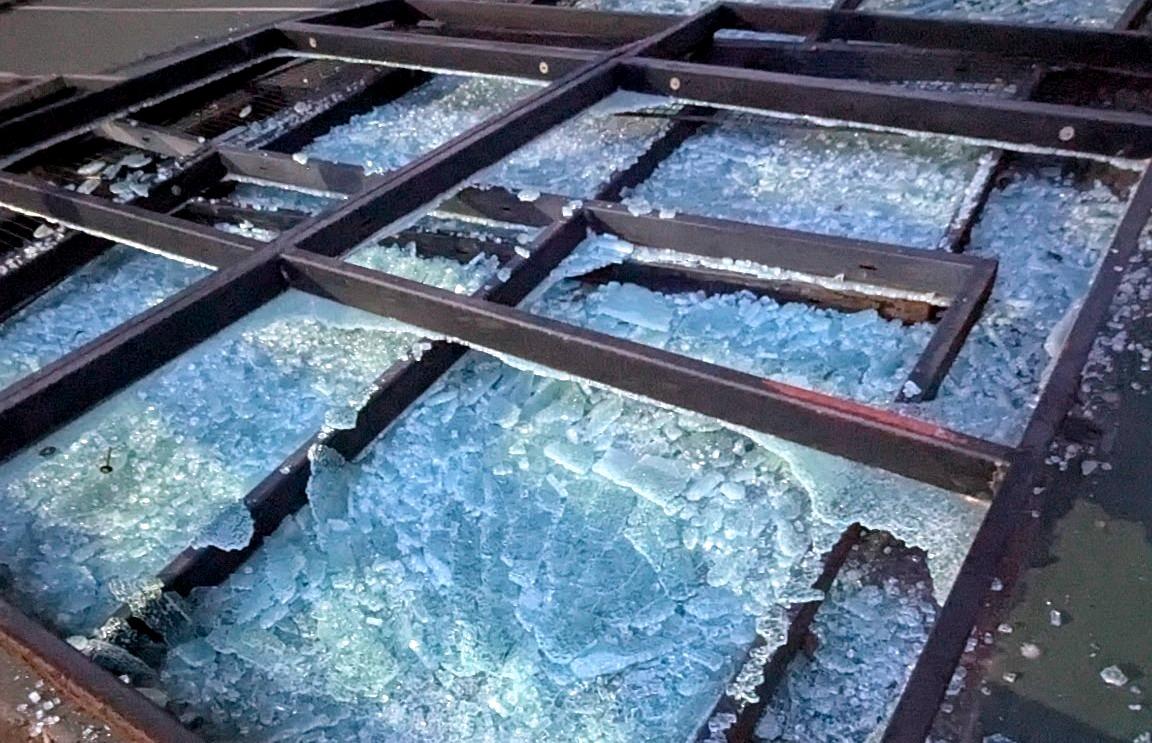
Improved drainage: We incorporated drainage channels throughout the lower structural members, including channels approximately every four to five feet, to help water escape rather than accumulate and potentially contribute to corrosion.
Higher-quality playing surfaces: We strengthened our relationships with Realturf and Mondo to offer premium turf options with consistent playing characteristics.
Upgraded glass: We standardized 12mm tempered glass across both indoor and outdoor court systems.
Simplified installation: We reduced the overall number of components, making the courts easier and faster to assemble.
Improved gate design: We redesigned our locking gate system to accommodate protective padding.
Better handling and logistics: We introduced a splice connection in the long cross members, making it easier to transport, offload, and install.
Updated anchoring: We transitioned to mechanical anchoring solutions (anchor bolts) that eliminate the need for epoxy
Updated foundation detail: Options for both 130mph wind loads and 110 mph wind loads
The biggest takeaway for me is that the real test of a product begins after installation. It’s one thing to engineer and manufacture a court; it’s another to see how that court performs over time, across different climates, facilities, and levels of use.
I’m proud that we listened to our customers and installers, acknowledged where we could improve, and made meaningful changes rather than simply continuing with the original design.
What’s the biggest misconception people have about building padel courts in the U.S.?
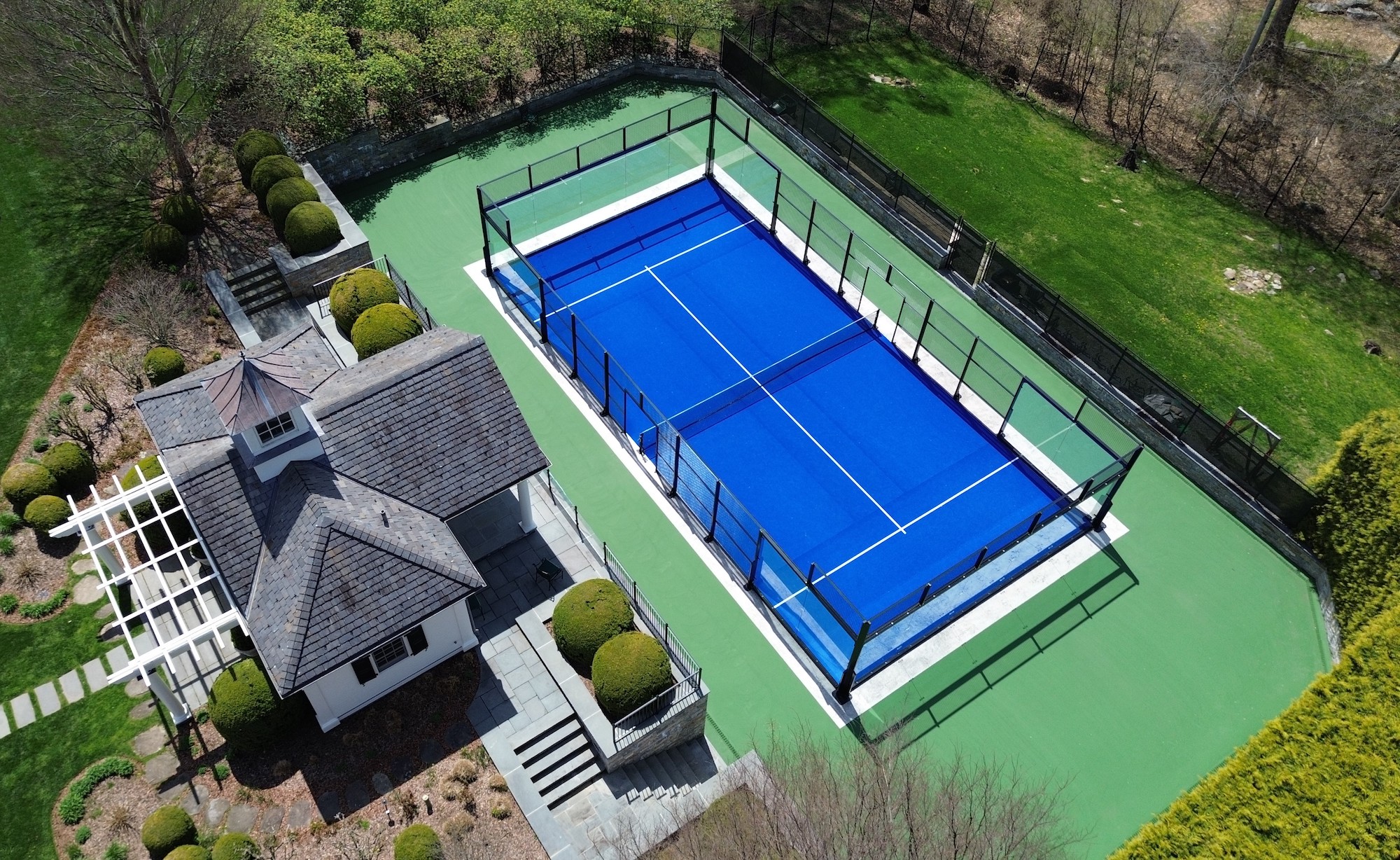
In reality, what happens underneath the court is just as important as the court structure above it.
Site preparation, drainage, foundation design, and local engineering requirements all play a critical role in the success of a project. A court can look beautiful and be manufactured to a very high standard, but if the foundation isn’t properly designed or constructed, you’re setting yourself up for problems.
One of the challenges in the U.S. is that building codes, wind-load requirements, soil conditions, and permitting processes can vary significantly from one location to another.
Some international manufacturers entering the U.S. market may not fully appreciate how different those requirements can be from the markets they’re accustomed to serving.
At Sportsfield Specialties, we have in-house engineering resources and work with independent engineering firms to develop and, when required, stamp project-specific structural drawings.
Something I’ve learned is that there really isn’t a one-size-fits-all approach to site work. A court being installed in South Florida may have very different engineering and foundation considerations than one being built in New England.
My advice is to evaluate the site conditions and engineering requirements early, before committing to a court design or construction budget. That upfront work can save a tremendous amount of time, money, and frustration later.
What’s one piece of advice you’d give someone considering building a padel court or opening a padel club in the U.S.?
My biggest recommendation would be to work with an established sports construction company or a qualified court builder. Ideally one with credentials through the American Sports Builders Association (ASBA), such as Northeast Padel in the northeastern United States. A company like this has been around in the industry for decades, and can help make sure that you have a compliant project for many years to come.
Padel is growing quickly, which is exciting, but rapid growth also attracts companies and individuals who may not have the experience necessary to properly execute these projects.
Building a padel court involves much more than assembling steel and glass. You’re dealing with site preparation, concrete, drainage, structural engineering, permitting, electrical work, and specialized installation.
I often compare it to building a house. You wouldn’t select a general contractor simply because they offered the lowest price. You’d want someone with experience, references, and technical knowledge to build it correctly.
The cheapest proposal isn’t always the least expensive project. Cutting corners during construction can create significantly greater costs down the road through repairs, delays, and ongoing maintenance.
I’d encourage anyone entering the industry to do their homework, ask questions, check references, and surround themselves with experienced professionals.
With approximately 1,100 – 1,200 courts in the U.S. at the end of Q3 2026, how many courts do you realistically anticipate by 2030? Could padel ever become as big as tennis or pickleball in the U.S.?
I’m probably a little biased because I genuinely love playing both padel and tennis, but I don’t look at these sports as competing against one another. I see them as complementary.
Tennis, pickleball, and padel offer different experiences that appeal to different players. Age, athletic ability, technical skill, competitiveness, and the social aspect of the game all influence what people gravitate toward.
I think having more racquet sports available is ultimately a positive for the entire industry.
I do believe padel has the potential to surpass platform tennis in the U.S. over the coming years. Platform tennis has established a loyal following, particularly in country club environments and certain geographic markets, but padel has broader international momentum and an opportunity to reach a much wider audience.
As for 2030, I’ve seen some very aggressive projections for the number of courts that will be built. Having been directly involved in these projects, I can tell you that the development process often takes considerably longer than people anticipate. And indoor space for multiple courts is difficult to come by.
Between securing real estate, obtaining permits, completing site work, financing projects, and coordinating construction, there are a lot of moving pieces. Building a quality facility takes time.
My personal outlook is that the U.S. could reach approximately 4,000 – 6,000 padel courts by 2030, assuming player participation continues growing and development activity remains strong. I think that’s an ambitious but more realistic range than some of the projections circulating in the industry.
That said, I think we’re sometimes focusing on the wrong metric.
Instead of asking how many padel courts we’ll have by 2030, we should be asking, “How many Americans will be playing padel by 2030?”
Court development is ultimately a response to demand. If we continue introducing people to the sport, improving accessibility, and creating great playing experiences, the demand for additional courts will follow naturally.
I’m less concerned about hitting a particular court-count milestone and more interested in building a sustainable player base that supports the industry for decades to come.
I don’t think padel needs to become bigger than tennis or pickleball to be successful. There’s plenty of room for all three sports to thrive, and I believe the growth of one can help introduce new players to the others.
If you enjoyed this article, please be sure to give it a like and/or restack below to help spread the word (yes, Substack has an algo, too!).
Please also consider subscribing to Padel Nation (for free!) to get exciting updates and important insights on the rapidly emerging U.S. padel scene like this one delivered directly to your inbox 2X weekly — or sharing it with a padel-playing friend.
Finally, as always, a big thank you to the friends and preferred partners of Padel Nation who help make posts like this possible, including:




Interested in becoming a friend or preferred partner of Padel Nation? Drop us a line here and let’s talk!
Oh, and one other thing… my brand-new 352-page padel book was just recently published. So, if you enjoy the work I’m doing in the U.S. padel space, you can support me by ordering a copy (or two!) online at Amazon or Barnes & Noble.
Or if you’re a club owner and you’d want to carry a handful of copies in your pro shop for “padel curious” people who are interested in trying the sport out but don’t know quite where to start, let me know and I can connect you with my publisher’s wholesale department.
Many thanks in advance!