

So I was interviewing GLDN PNT founder and CEO Scott London a while back. GLDN PNT is one of the new kids on the block selling padel clothes. At some point during the interview, I asked London: “So are padel clothes a real thing?” which is a great thing to ask a guy who sells padel clothes.
“I told a very good friend of mine, ‘I’m gonna start a padel line,’” said London. “And he said, ‘Oh, that’s great, because there’s nothing to wear.’ And I said, ‘Ronnie, you know there’s a world of tennis clothes out there. I’m not gonna actually do anything different. It’s basically the same. Clothing is clothing at the end of the day, it’s all about attitude right?’ He was like, ‘Yeah, but you know, I’d still rather wear padel clothes.’”
That got me thinking about what Ronnie meant by “padel clothes,” especially after I read an announcement about GLDN PNT’s new padel collection with Reebok. I never think about clothes or fashion and I know diddly squat about either of them. Fashion to me is European guys in orange pants, stubble beards, manscaping and my girlfriend putting me up on a box so the Nordstrom associate can measure my waist. Also, hats other than baseball caps and guys wearing loafers without socks. Maybe also Jaden Smith wearing a skirt. That’s it. That’s my understanding of fashion.
But Scott London knows fashion. He helped build Wu-Wear, Zoo York and Baby Phat, companies I had never heard of before I interviewed him. He believes in padel fashion. So I figured I’d look into it. Who knows, maybe Racquet would run it.
I started asking my friends, the guys I play padel and tennis with. “Is there such a thing as padel clothing?”
They, of course, had no idea what I was talking about. Their kits run T-shirt, gym shorts, socks and shoes, just like mine, regardless of the sport they’re playing.
My friend Steve, who used to teach tennis at the Sherwood Country Club in Los Angeles (wearing all white), buys everything he wears on court at Costco, then tells us what a great deal he got on it.
“See this?” he’ll say, pointing at his shirt. “Eleven bucks.”
Which seems to me a pretty fair price for a shirt whose whole purpose is to get sweaty and tossed into a hamper.
“I don’t wear much padel-specific clothing,” my buddy Ben Blair told me. “I wear all the same stuff I’d wear on the tennis court. At the end of the day, athletic shirts and shorts are more or less the same. The only thing that truly differentiates tennis clothing from padel or pickleball clothing is the marketing.”
That’s a bold statement from Ben, and one I agreed with when he said it. But then I started seeing ads for padel clothes. Dour models, hoodies, Instagram posts touting “Technical padel apparel,” $90 T-shirts designed “for the court and what comes next.”
So I asked my female friends, which I should have done initially.
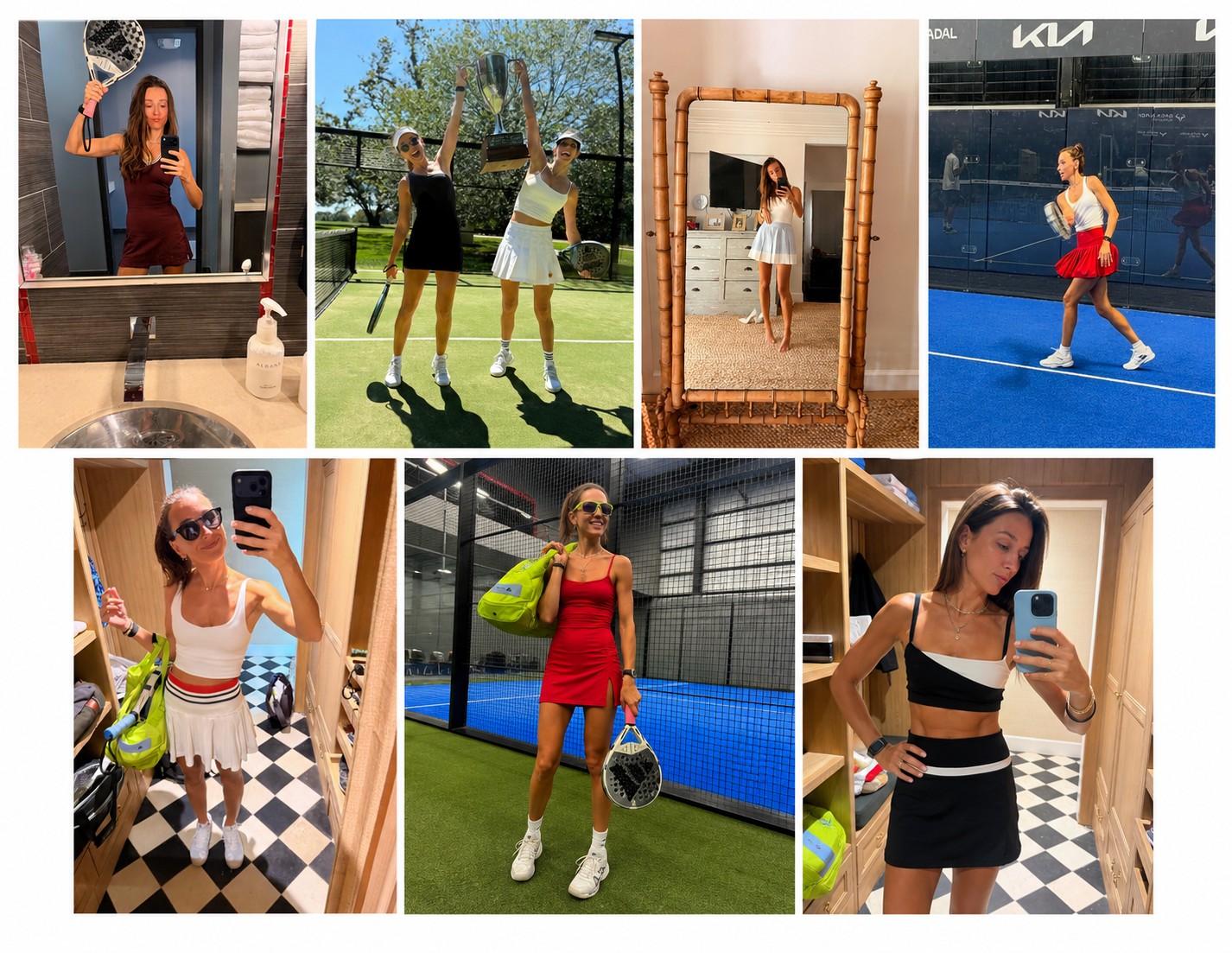
Maureen O’Malia, who runs Pickleball at the Park City municipal racket sports facility in Park City, Utah, weighed in first.
“I mean, it’s pretty easy for guys,” she told me. “As long as the shorts they are wearing have at least one pocket, they are good. But it’s all the same stuff though, whether it’s tennis, pickleball or padel. The women, on the other hand, are much more enthusiastic about what they wear onto the court. In any racket sport.”
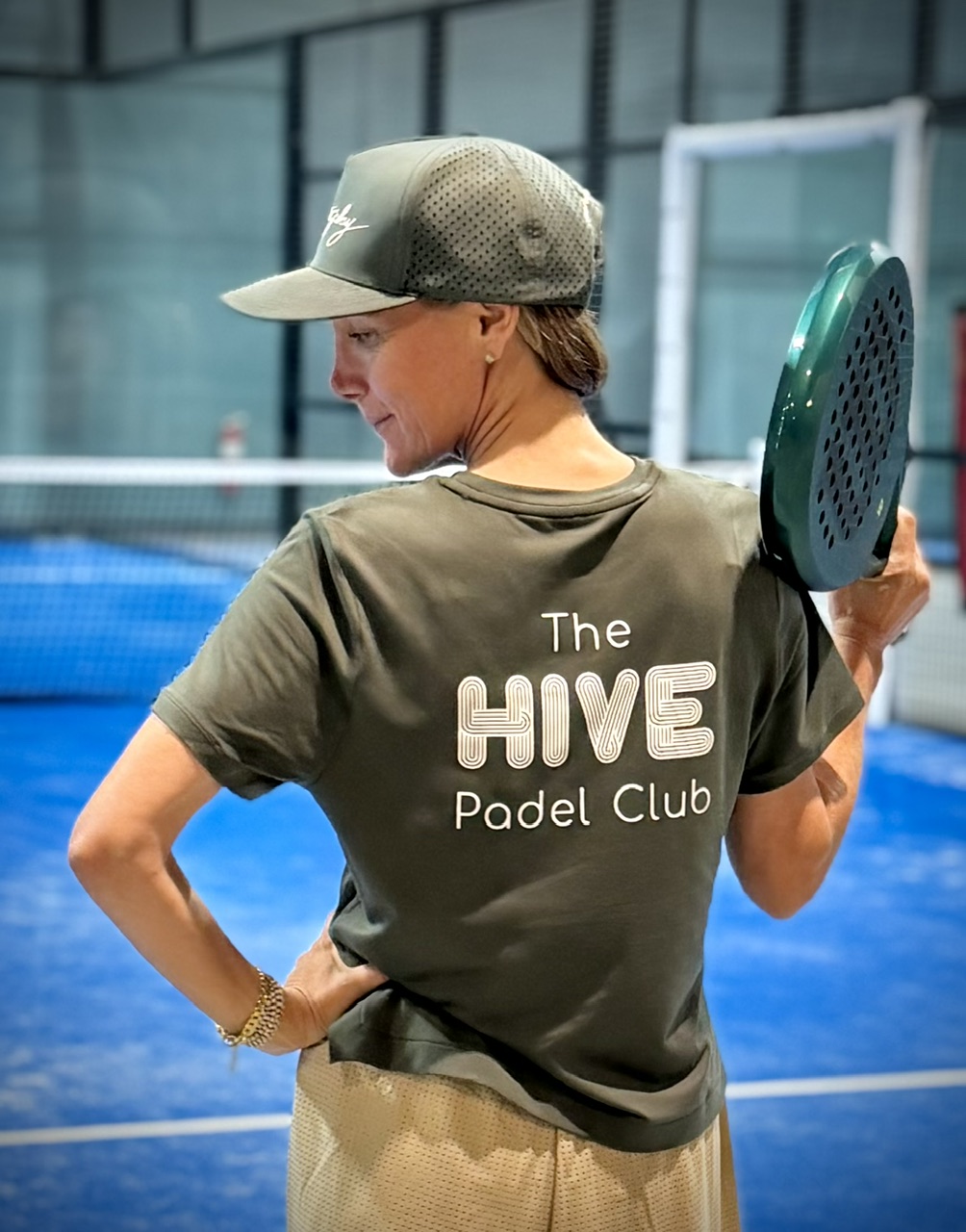
That made sense. In my experience, women usually wear tennis clothes, skirts, tops, dresses, and very seldom wore T-shirts, regardless of what racket sport they were playing. I asked Hollye Shepherd, owner of The Hive in Salt Lake City, what women were wearing at her club and who was running the fashion show there.
“The Latina women are stepping up their game, man,” Shepherd told me. “They look adorable. They look sexy. They look good. The Latina influence in padel is up-leveling the fashion culture for women because they come with a different style and a different aesthetic that is cultural. I think that’s a good thing.”
I asked her if the other women at her club were noticing and if so, what effect it was having on the way those women dressed.
“When you have a group of women wearing cute clothes at a club — padel club or whatever — you start seeing other women follow suit,” she said. “You feel the pressure as a woman. There were some really cute skirts last night, and I was thinking, ‘Wow, where did she get that outfit?’ It’s just something that occurs to you.”
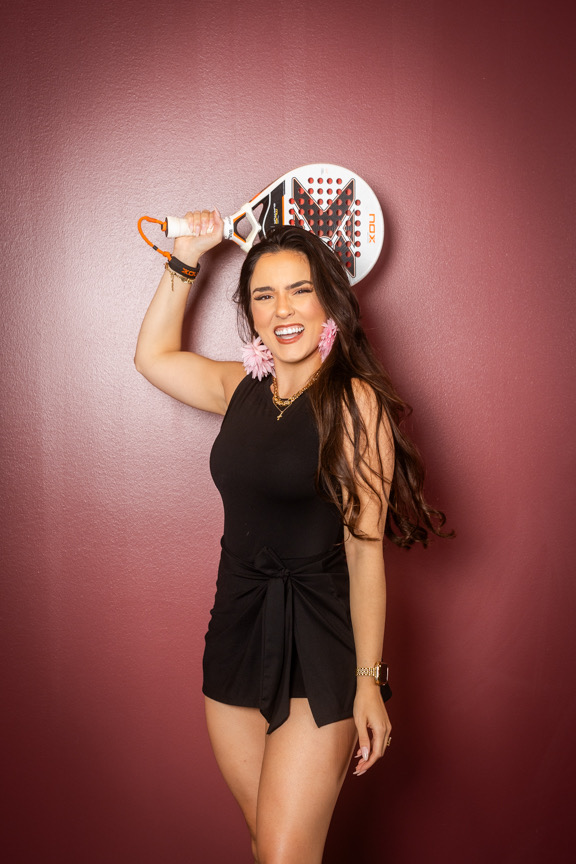
To show me what she was talking about, Hollye organized a fashion shoot at The Hive and sent me the pics. They looked great. No men at all.
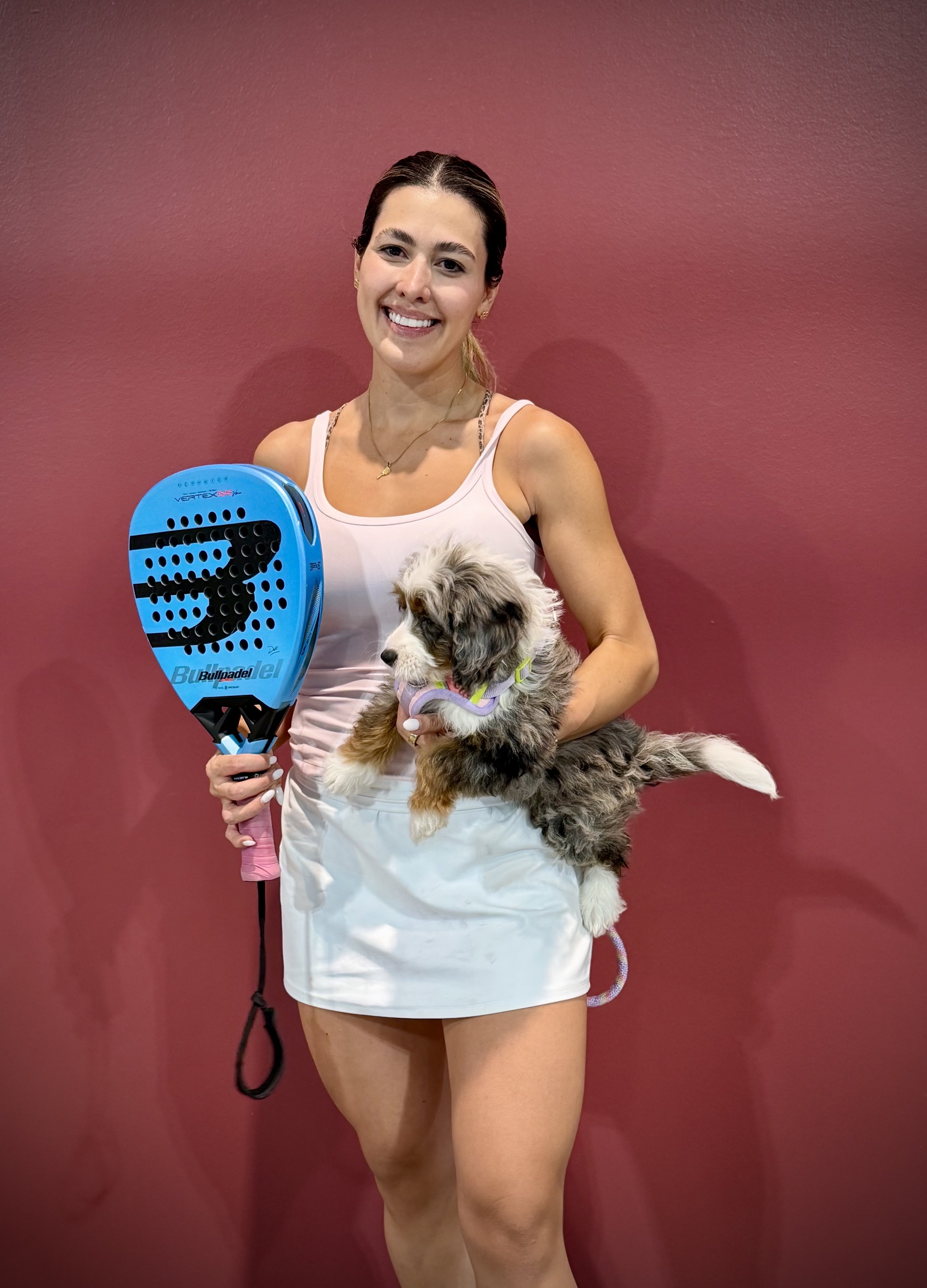
Okay. So even if the men were oblivious, women were ALREADY defining the need for padel clothes and what they were supposed to look like. I tested this new idea out on my female friends at P1 Padel in Vegas. Do you feel pressure to dress to impress on the padel court? Are you influenced by what other women are wearing? Do you like men in orange pants? My friend Parisa said this:
“What I’ve noticed watching the Pro Padel League is that the women wear loose-fitting Nike Dri-FIT-type shirts. They’re loose, where in tennis we wear everything tight and cute. But I feel like it’s evolving, you know because padel’s becoming more popular and obviously there’s going to be more style.”
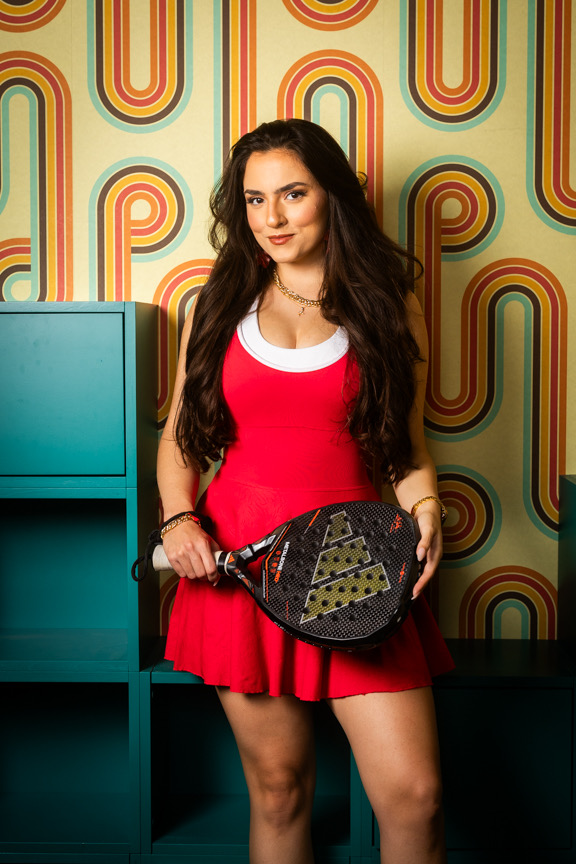
Okay, great. Padel clothes are coming. There’s going to be more style! But then, Olivia Bolelo, another sharp dresser from P1, and someone who used to play a lot of tennis, told me this:
“Since I made the switch from tennis to padel I haven’t changed my attire at all. It functions just as well on the padel court. I would say I wear a mix of tennis and gym clothes depending on my mood and the weather that day.”
Okay, so I’m a thousand words in and my thesis was now: Men couldn’t care less what they wear on the court, any court. Women who play padel are conscious of what they wear, but they’re still mostly wearing tennis clothes.
It was time to talk to the experts, the professionals, people who sell padel clothing for a living. The ones with the most to gain if padel clothes are actually a thing.
Philippe Urreiztieta, CEO of 4040 Distributors, NOX Sport’s exclusive U.S. distributor, confirmed that from NOX’s perspective, padel clothes are definitely a thing.
“In high-growth markets like Miami, Los Angeles and New York, expectations are high for both men and women,” he told me. “We’re still gathering a lot of primary data from the market, so we’re learning as we go. But men definitely have expectations around style too. For example, I was playing recently with a guy who asked me if we had shoes in flashy colors. He wanted yellow shoes.”
Yellow shoes? Come on.
“In padel, you kind of bring your own personality to the court,” GLDN PNT’s London said. “Clothing is clothing at the end of the day. But when we go to the store, we’re thinking about who we want to be. We’re playing. It’s a costume. It’s dress up. And when we pick something out of our closet, it’s the same thing. We’re thinking, ‘Who do I want to be and who do I want the world to know that I am?’”
Most of the clothing folks I spoke with designed their lines in opposition to the “tennis aesthetic.” It became clear to me that clothing folks, people who know fashion, think of tennis clothes as stuffy, muted from a color standpoint, and worn by old guys at country clubs on the hook for $450 in food every quarter. Starched polo shirts, women with huge visors, TravisMathew, loafers without socks and white-knuckle USTA 3.0 women’s league play. London put it this way:
“Padel is to tennis what snowboarding is to skiing. Snowboarders could have worn ski clothes, but they wanted stuff that was grungier, baggier. So now, all the skiers want to dress like their cooler cousins. They want to dress like the snowboarders dress.”
London-based One Bounce, another recent entry into the padel clothing market, bills itself as “Premium Padel-Inspired Athleisure.” I don’t know what that means. But its tagline reads: “At One Bounce, performance isn’t just what you do, it’s how you live.” That, I get. Padel isn’t just a sport you play, it’s also who you are.
“In terms of clothes, padel is a massive community,” said One Bounce founder Nicolas Larrosa Gomez. “Normally, when we belong to a community, we want to show that we belong to it. That’s why people buy specific padel clothing. They want to show that they are part of the padel community.”
That made sense. People wear padel clothes for the same reason they wear Arsenal away kits, AC/DC T-shirts and Dodger caps: to show the world which tribe they belong to.

But it can’t just be that simple though, can it? There’s got to be some kind of functional difference that sets padel clothes apart, right?
Turns out, there is. Kind of.
Gomez teaches padel at House of Racquet in King’s Cross, London, which happily stocks his clothes. After watching women repeatedly playing padel in yoga and Pilates leggings and struggling to find a place to put the second ball, Gomez began designing leggings with pockets.
Pulco Studios founder Joe Middleton was amazed by the athleticism of the top padel players. But Middleton, who put in 20+ years at Levi Strauss & Co., also found himself thinking: “What the hell are these guys wearing? They’re playing this amazing sport, but they’re wearing the same sort of stuff they’d wear to the gym, running or a spinning class. It had no distinctive look.”
Middleton told me he believes Pulco makes “the best Padel shirt in the world.” To find the distinctive look he wanted for Pulco, Middleton started asking padel players what they wanted in their padel clothes, and also what bugged them about their current kits. There was one thing nobody cared for: “Sweat.”
Middleton says moisture-wicking works to a point, but it doesn’t completely solve the sweat problem.
“I went looking for another approach and eventually found an Italian mill specializing in highly technical fabrics,” he said. “Instead of moving moisture across the fabric, this technology moves it from the inside of the garment to the outside. We call it our AirCon technology. The outside of the shirt can still have sweat on it, but the inside stays substantially drier. Effectively, you feel like you’re wearing a dry shirt.”
Okay, I’ll accept leggings with pockets and sweat-moving fabric as functionally kind of different. They’re definitely selling points for new clothing companies trying to establish themselves in the U.S. padel market.
But what about the established players, NOX, Bullpadel, Wilson, HEAD and Babolat? They’ve been selling clothes for a while now. What’s their approach?
“NOX is one of the premier brands in padel, and we want it to feel elegant, prestigious and premium while still being sporty,” Urreiztieta told me. “Globally, we’re one of the biggest brands in padel. We have the number-one player in the world and sold around 500,000 rackets last year. But when we introduce ourselves to a U.S. consumer, we don’t assume they know any of that. We want to educate people about the brand and explain why the products are different.”
NOX’s website actually looks a bit more conservative, more tennisy than some of the other brands I saw. Less beard stubble, more white clothing, clean-cut models smiling at you instead of looking bored or off into space, not as many hoodies. The aesthetic is class more than rebellion. Put it on the Underhill’s tab.
If you Google Wilson padel clothes, you end up on a page that says “All Padel.” But when you click on “Sportswear,” it takes you to a page that reads Sportswear & Activewear. It doesn’t call out padel or any other sport as a category on this page. I asked Wilson about it and they said this:
“At Wilson, we design apparel for all racquet sports, including tennis, padel, and pickleball. The common thread across all of them is performance — we want our clothing to help players perform at their best, whether they’re competing at the highest level or simply enjoying the sport. And that approach applies across all racquet sports — we want to make sure our apparel is not only technically high-performing, but also beautifully designed and relevant to the way the game is evolving.”
The company sells men’s and women’s clothing that works across racket sports, and does not feel the need to call each sport out by name. The key, says Wilson, is working with the athletes the company sponsors and actually listening to what they want.
“Athlete-driven design is a key part of our process,” a Wilson spokesperson told me. “We’re fortunate to work with some of the best players across different racket sports, from ATP players like Alex de Minaur and WTA players like Marta Kostyuk, to Premier Padel players such as Momo González. Having athletes from different disciplines involved is really valuable for us because they give us direct feedback on what they need from their apparel.
“We listen to our athletes, understand how they move and what they need on court, and use those insights to continuously improve our products. And that approach applies across all racquet sports — we want to make sure our apparel is not only technically high-performing, but also beautifully designed and relevant to the way the game is evolving.”
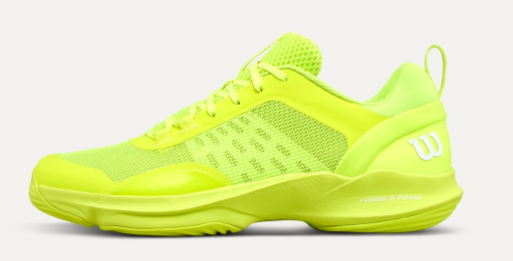
The only clothing on the Wilson website that actually has the “padel” designation is “shoes.” Serendipitously, they happen to carry a sweet pair of yellow padel shoes which you can buy here. Interestingly, as I was researching this article, a variety of the folks I spoke with pointed to “shoes” as the major differentiator between padel and other racket sports.
NOX’s Urreiztieta laid it out for me.
“Shoes are an area where we think we have a major advantage,” he said. “We design proprietary footwear specifically around what each sport requires. The court surfaces and player movements are different. We studied the movement patterns of pickleball and padel players and designed footwear around those differences.”
Felix Schumann, Product Category Director at HEAD Penn Racquet Sports, told me shoes are the whole ball of wax, from a padel specificity standpoint.
“As far as sportswear goes, there are no differences in material needed for the different racquet sports,” Schumann said. “The big difference in equipment other than rackets is shoes. We have dedicated lines for tennis, pickleball and padel. All three have their perks. Padel shoes specifically need less protection against abrasion as it’s played on turf, so the shoes can be lighter and more flexible but not as durable. Additionally, the outsole is rounded in the forefoot as players do more turns and twists on the spot, especially around the glass.”
The padel section of HEAD’s U.S. website has a big picture of Arturo Coello staring right at you. You can buy Coello’s racket and a HEAD Coello Tour Padel Backpack, but there is no page for “padel clothing.”
So? Did I answer my question? Are padel clothes a thing, or just marketing?
Functionally, there doesn’t seem to be much of a difference between padel clothes and tennis clothes, except for shoes.
Culturally and stylistically, there definitely is.
And while that’s the best I got for 2,600 words, it’s not a super satisfying answer, at least for me. Racquet passed, so maybe it wasn’t a satisfying answer for them either.